Buckshot Roulette Strategy Guide: How to Win More Runs
Learn the best Buckshot Roulette strategy to win more runs. Master shell tracking, self-shot vs dealer decisions, item timing, probability reads, Adrenaline steals, and advanced…
The best Buckshot Roulette strategy is simple in theory and brutal in practice: track the shell ratio, reduce uncertainty with items, and only take self-shots when blank odds clearly favor you. If you want to win more runs, you need more than nerve. You need a repeatable decision process that tells you when to slow down, when to attack, and when the chamber is too dangerous for guesswork.
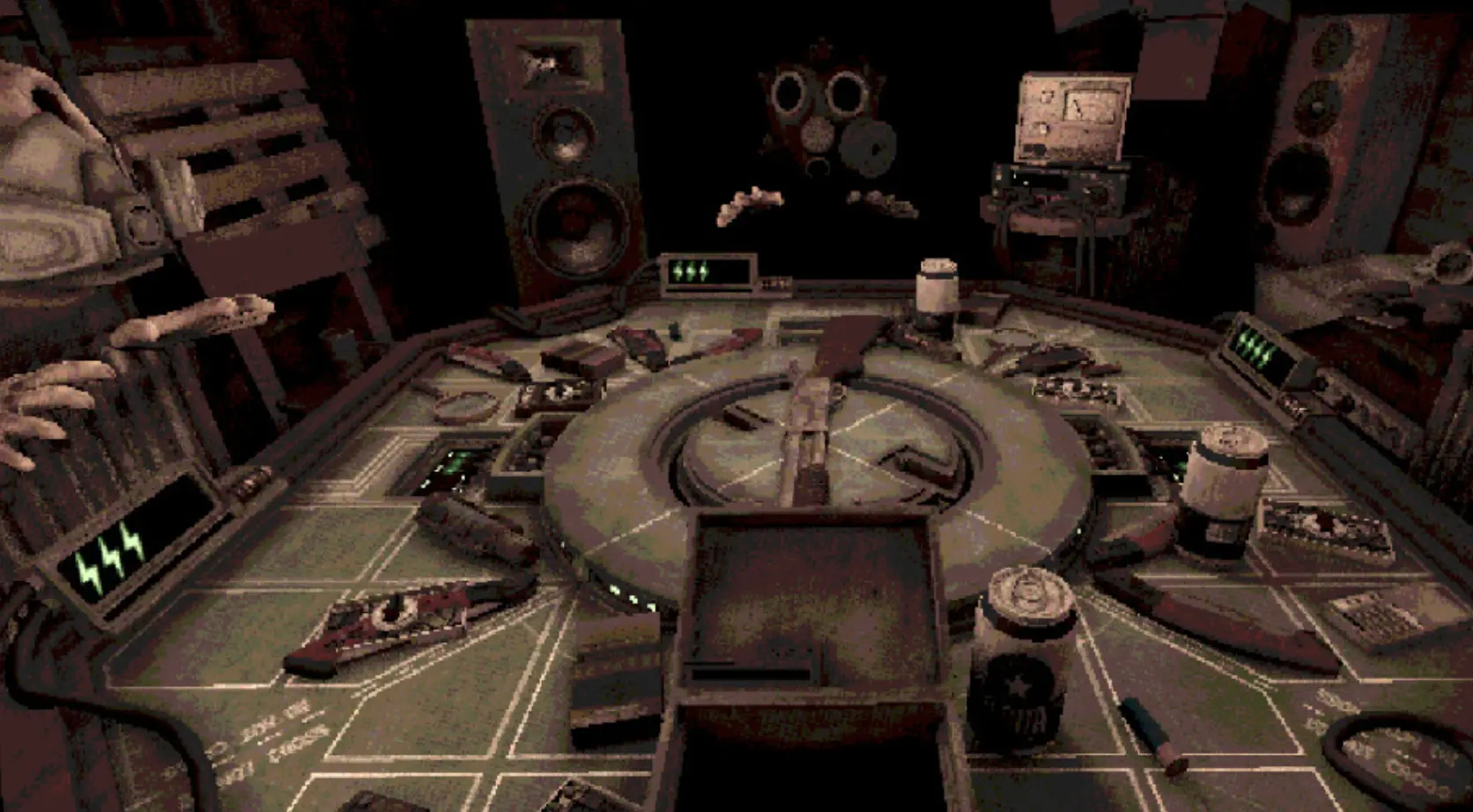
A real Buckshot Roulette round looks simple at first, but nearly every decision is shaped by shell ratio, item timing, and whether the dealer has enough information to act correctly. That is why the best strategies focus on control and prediction instead of panic.
What is the best Buckshot Roulette strategy?
The strongest Buckshot Roulette strategy guide starts with one rule: do not treat every shot like a random 50/50. Most losing runs come from players who stop tracking the chamber, waste strong items too early, or fire at the wrong target just because the situation feels urgent. The best strategy is to turn uncertainty into manageable choices before the round spirals out of control.
- Track the live-to-blank ratio before every risky shot.
- Shoot yourself only when blank odds are clearly in your favor.
- Use items to reduce uncertainty or steal tempo, not just to react late.
- Play safer when the chamber becomes live-heavy or difficult to reconstruct.
- Let logic decide the final shots, not panic.
When to shoot yourself and when to shoot the dealer
Target selection is the core of Buckshot Roulette strategy. The right choice depends on shell ratio, item support, and how much of the chamber you can actually trust. If you make the wrong target call, even good shell tracking can collapse into a lost run.
A big part of Buckshot Roulette strategy comes from understanding when the dealer actually knows the next shell and when it is effectively guessing.
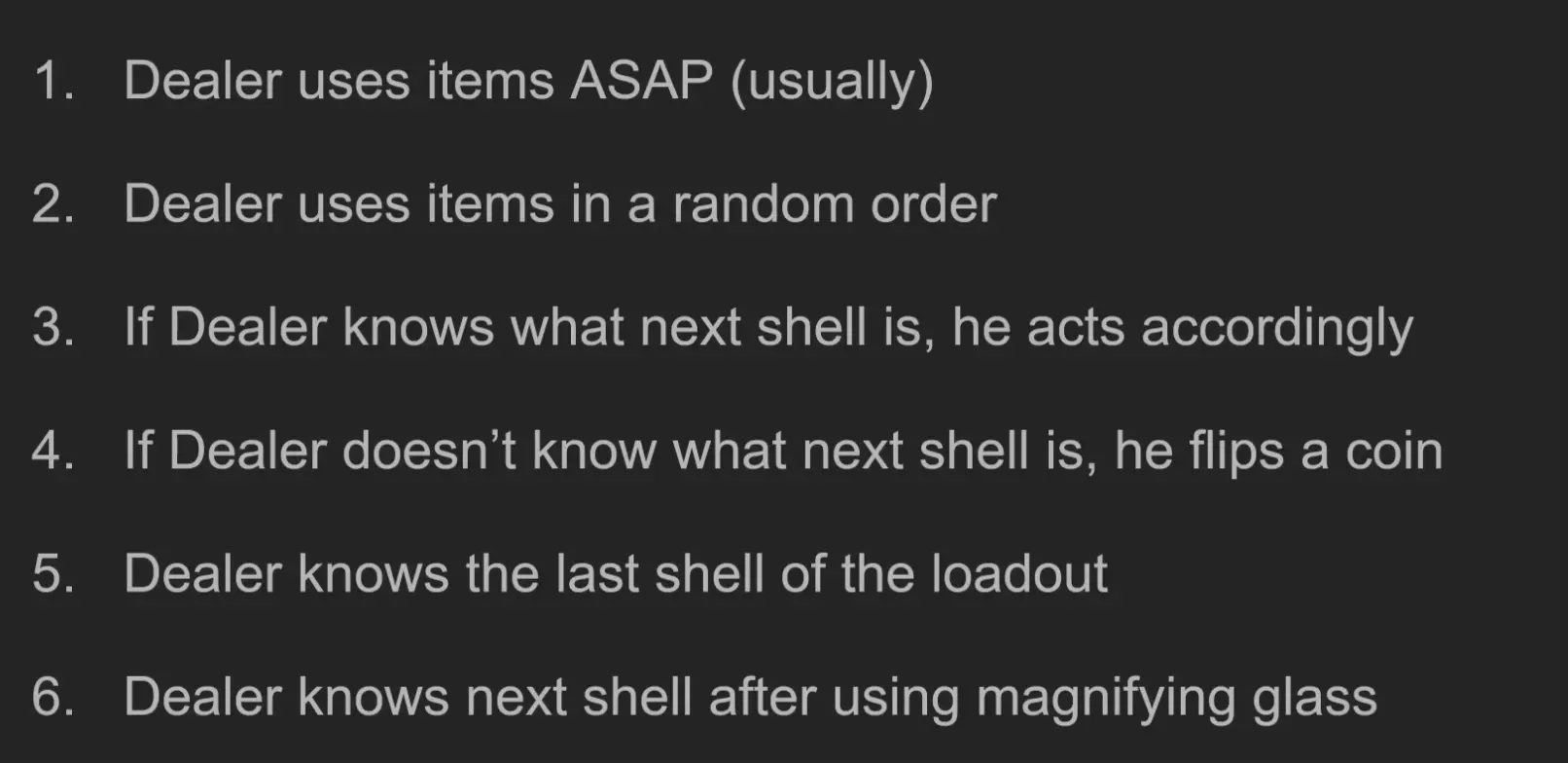
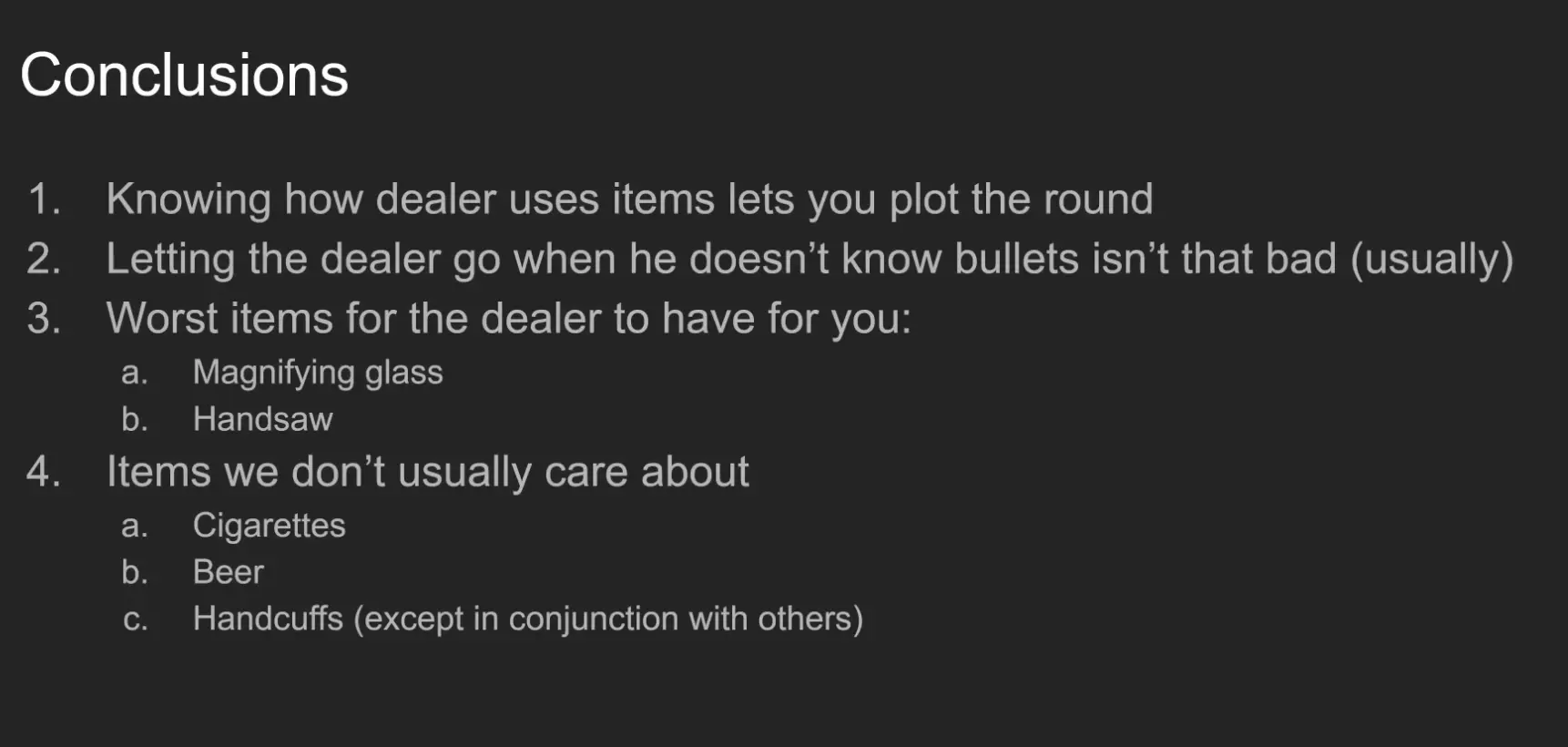
This is why passing the turn is not always as dangerous as it feels, especially when the dealer has no reliable shell information.
Shoot yourself when blank odds clearly favor you
If the chamber is blank-heavy or you have item-backed confidence that the next shell is safe, shooting yourself can be the highest-value move. A safe self-shot helps you skip a dangerous exchange, keep initiative, and deny the dealer a clean chance to act. This is strongest when you are not gambling blind and your read of the chamber is actually grounded.
Shoot the dealer when live pressure is high
If several live shells are still likely in the chamber, risk should usually be pushed outward. This is when attacking the dealer becomes the better option, especially if you have just confirmed shell information or narrowed the chamber with an item. Good players do not force self-shots just to look clever. They move risk to the side that benefits them most.
Why longer loadouts punish guessing
As the loadout grows, rough instinct stops being enough. Early in a short chamber, ratio memory can carry you. In longer loadouts, you need stronger discipline. Count more carefully, respect uncertainty, and avoid pretending that confidence is the same thing as information.
How to track shells without getting tricked
One of the biggest gaps between beginner tips and actual Buckshot Roulette strategy is shell tracking. You do not need perfect memory, but you do need a repeatable method that keeps you from making lazy assumptions when the table gets messy.
- Start with the live-to-blank ratio shown at the beginning of the loadout.
- Update your count after each confirmed shot instead of trying to memorize the whole chamber at once.
- Do not trust table clutter or old casing visuals more than your running count.
- Late in the round, rebuild what is left in the chamber based on what has already been fired.
- If your reconstruction gets shaky, stop making aggressive plays until you recover information.
Probability examples that actually change your decisions
Buckshot Roulette feels chaotic, but some chamber states push you toward very different decisions. You do not need to calculate every move like a spreadsheet. You just need to recognize when the current ratio makes a self-shot, dealer-shot, or information play clearly better.
The dealer does not always convert dangerous chambers into optimal pressure, which is why some high-risk states are less punishing than they look.
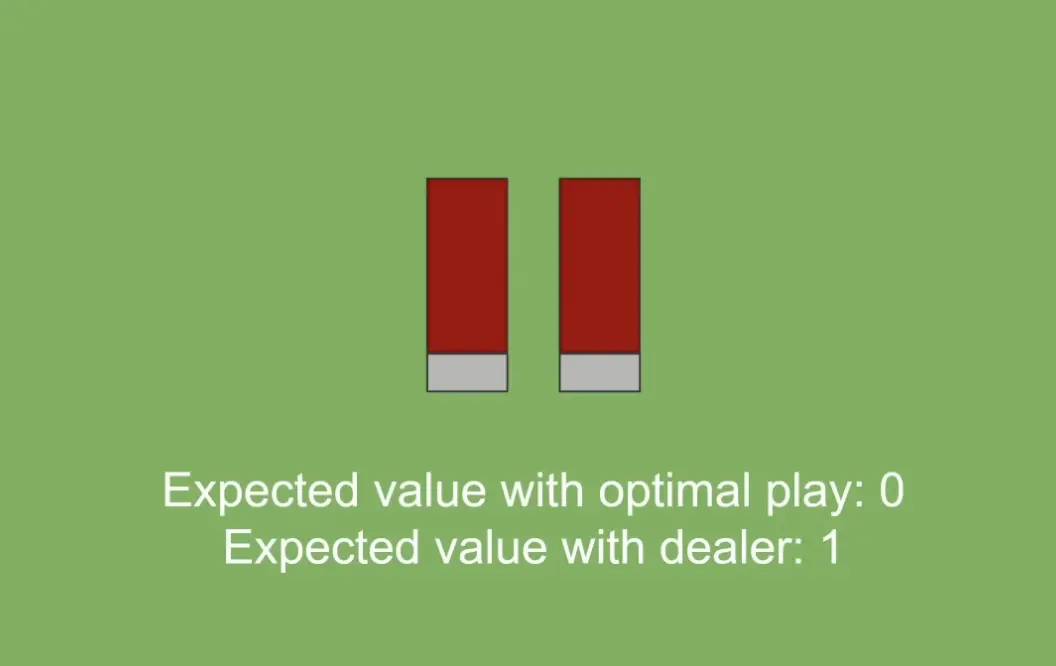
When the AI lacks direct shell knowledge, it can still behave like a coin flip even in chambers a human would play much more aggressively.
4 live / 2 blank: high-pressure attack state
With 4 live and 2 blank shells, the chamber is live-heavy. That means the next shell is blank only 33.3% of the time if you know nothing else. This is usually not the moment to get cute with self-shots. If you have damage support like Saw or strong confirmation from another item, pushing pressure onto the dealer becomes much more attractive.
1 live / 3 blank: ideal self-shot filter state
With 1 live and 3 blank shells, the chamber is blank-heavy. The next shell is blank 75% of the time if the order is still unknown. This is one of the best situations for self-shot logic because a blank lets you safely keep control. If you can confirm or remove that one dangerous live shell, the round becomes much easier to manage.
Probability-based strategy gets much stronger once you stop assuming that every blank-heavy chamber automatically favors self-shots.
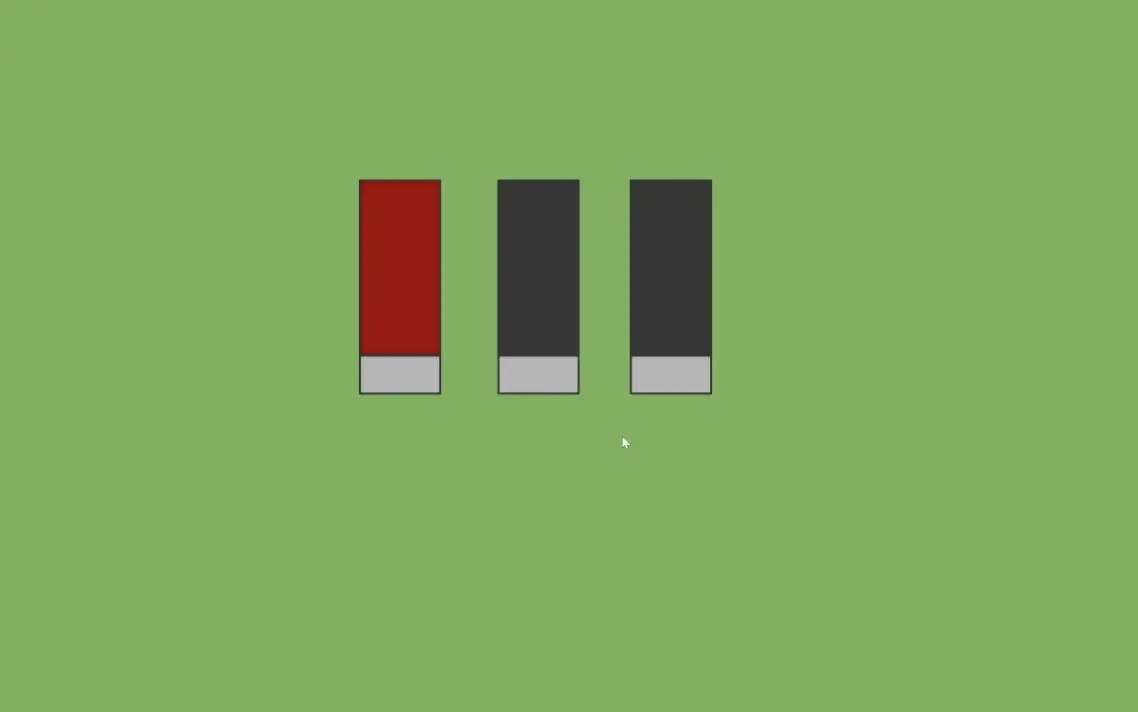
This is exactly why shell ratio alone is not enough. You also need to think about what happens after the current shell is cleared.
3 live / 3 blank: unstable even state
A 3 live / 3 blank chamber is the kind of state that punishes blind confidence. With no probability edge, information items and tempo items rise sharply in value. This is where Burner Phone, Magnifying Glass, or a well-timed control play can be worth more than raw bravery, because they help you break an otherwise even and dangerous chamber.
Best items and combos in Buckshot Roulette
Items are what turn Buckshot Roulette from a simple guessing game into a real decision game. The best items do not just save you once. They either reduce uncertainty, shift tempo, or change how much damage a correct read is worth.
Magnifying Glass: the strongest information item
Magnifying Glass is one of the best items because it collapses uncertainty immediately. Once you know the next shell, you stop playing theory and start making a real decision. It becomes even stronger when paired with tools that let you exploit that information right away.
Handcuffs: tempo control matters more than raw damage
Handcuffs are powerful because they steal turns. In Buckshot Roulette, controlling who gets to act next is often more valuable than simply hoping for damage. If you deny the dealer a turn while using good chamber knowledge, you turn a dangerous round into one you can actually manage.
Beer: strongest in long and ugly loadouts
Beer looks less flashy than pure information tools, but it becomes stronger as the chamber gets messier. In longer loadouts, removing one unknown shell can improve your odds more than players expect and make the rest of the chamber easier to read.
Cigarettes: only good when health state makes them matter
Cigarettes are not an automatic use item. Their value depends on your current health state and how dangerous the round is becoming. Use them when extra survivability changes your decision tree, not just because you happen to have them.
Saw / Handsaw: damage changes target selection
Saw, sometimes referred to as Handsaw, is not just a damage boost. It changes which target makes sense. If you have strong confidence that a live shell is coming, amplified damage makes dealer-targeting much more attractive. But Saw becomes a wasted resource when the chamber is still too unclear. The best use is when information and damage line up at the same time.
Adrenaline: steal items that create control, not clutter
Adrenaline is strongest when you use the dealer’s resources to create an immediate decision advantage. The highest-value steals are usually the ones that either remove uncertainty or stop the dealer from answering back.
- Steal Handcuffs when you want tempo and the chance to convert a strong chamber read into free pressure.
- Steal Magnifying Glass when the chamber is still unclear and one confirmed shell changes your whole target decision.
- Avoid using Adrenaline on low-value exits like Beer unless the chamber state makes that removal unusually important.
Advanced items: Inverter and Burner Phone
Depending on the version or mode you are playing, advanced items such as Inverter or Burner Phone may appear and significantly change decision-making. Inverter becomes especially dangerous in live-heavy states because it can flip the value of a chamber instantly, while Burner Phone is strongest in even or unclear chambers where one future clue lets you break symmetry and plan ahead with confidence.
Buckshot Roulette strategy by game state
The best Buckshot Roulette strategy is not static. Good decisions depend on the state of the round. What works early does not always work late, and items become more or less valuable depending on how much information and pressure you are dealing with.
Early-round strategy
At the start of a loadout, focus on the ratio instead of pretending you know the whole sequence. Early rounds are about building information and avoiding unnecessary damage. Unless blanks clearly dominate, resist the urge to take flashy self-shots just because the opening feels calm.
Mid-round strategy when uncertainty spikes
This is where items become most valuable. Enough shells have been fired to create partial information, but not enough to make the chamber obvious. Use information and tempo items here to confirm your read before the chamber gets too dangerous. Mid-round greed is where many strong starts fall apart.
Late-round strategy when every shell matters
Late rounds reward discipline more than bravery. Once only a few shells remain, every fired shot gives you stronger reconstruction power. This is when good players stop thinking in vibes and start trusting the chamber logic they built through the round.
Final-state pressure and survival logic
When the round reaches a lethal state where one mistake can end everything, target selection and item timing become brutally sharp. This is not the moment for random courage. If the chamber is unclear, protect yourself. If the chamber is readable and damage value is high, punish the dealer.
Double or Nothing strategy differences
Double or Nothing changes how greed should be evaluated. In the base game, some risky lines are acceptable because one strong read can swing the round back. In Double or Nothing, reckless plays become more punishing because item economy, survival margin, and the cost of a bad gamble all matter more.
- Value information more highly, because bad guesses become more expensive.
- Do not waste premium items early just because you want to force tempo.
- Protect stable positions instead of chasing low-confidence high-reward lines.
- Treat greed as something you earn with information, not something you start with.
Common mistakes that lose runs
Once you understand the dealer’s habits, some situations stop being scary and start becoming exploitable.
The most dangerous dealer states are not “dealer has items” in general, but dealer has the right information tools and enough tempo to convert them.
- Treating every shot like a flat 50/50 when the shell ratio clearly says otherwise.
- Using strong items too early when the chamber is still manageable.
- Holding strong items too long and dying with value still in hand.
- Ignoring how Saw changes the value of dealer-target shots.
- Using Adrenaline on low-impact item steals when a stronger control play is available.
- Playing aggressively in Double or Nothing before you have enough information.
- Stopping shell tracking once the round becomes stressful.
- Confusing confidence with control in the final part of a loadout.
FAQ
What is the best Buckshot Roulette strategy?
Track shell ratio carefully, use items to reduce uncertainty, and only shoot yourself when blank odds clearly favor you.
How do you win more often in Buckshot Roulette?
You win more runs by managing risk, remembering what has already been fired, and using items for control instead of panic.
Should you shoot yourself in Buckshot Roulette?
Yes, but only when the chamber is blank-favored or when a safe self-shot gives you a better overall position.
What are the best items in Buckshot Roulette?
Magnifying Glass and Handcuffs are among the strongest because they give information and tempo control, while Beer becomes excellent in longer loadouts.
Is Saw / Handsaw one of the best items in Buckshot Roulette?
It can be excellent when you already have strong chamber information, because extra damage makes the right dealer shot much more rewarding.
How should you use Adrenaline in Buckshot Roulette?
The best Adrenaline plays usually steal high-impact control or information items, especially Handcuffs and Magnifying Glass.
How is Double or Nothing strategy different?
It rewards discipline more than reckless aggression. Information, item economy, and mistake avoidance matter even more there.
Does strategy change by round or loadout state?
Yes. Early rounds are ratio-driven, mid-rounds are item-heavy, and late rounds reward precise chamber reconstruction.
Is Buckshot Roulette pure luck?
No. Luck matters, but strategy, shell tracking, and item timing decide many more runs than blind guessing.
Can you predict the next shell in Buckshot Roulette?
Not perfectly every time, but you can estimate it by tracking shell counts, remembering previous shots, and using information items well.
Is Buckshot Roulette a strategy game?
Yes. It mixes chance with decision-making, memory, and risk management, which is exactly why strong players win more consistently.
Does a Buckshot Roulette strategy calculator help?
Yes. It is especially useful when you know the live-to-blank ratio and want a faster way to judge whether the next shot is worth the risk.
Useful resources
Next step
If you want to apply this Buckshot Roulette strategy immediately, open the game page, track the shell ratio from the first loadout, and make every shot serve a purpose instead of a guess.