Geometry Dash Ship Control Tips – How to Fly Straighter and Stop Dying After Portals
Learn how Ship really works in Geometry Dash 2.2. Master straight fly, mini ship, gravity portal transitions, and the best official levels to practice ship control.
Ship is the mode that ruins a surprising number of otherwise good runs. You can be fine on Cube, survive Wave, and still lose everything because one Ship corridor made you hold half a beat too long.
That is because Ship is not a direct movement mode. It has gravity, upward thrust, and visible inertia. You are not drawing a clean line like Wave. You are managing a floating object that keeps drifting even after your input changes.
This guide explains Ship the smart way for the 2.2 era. You will learn why normal and mini ship feel so different, why gravity portals kill so many players, how straight fly actually works, and which official levels are best for building reliable ship control.
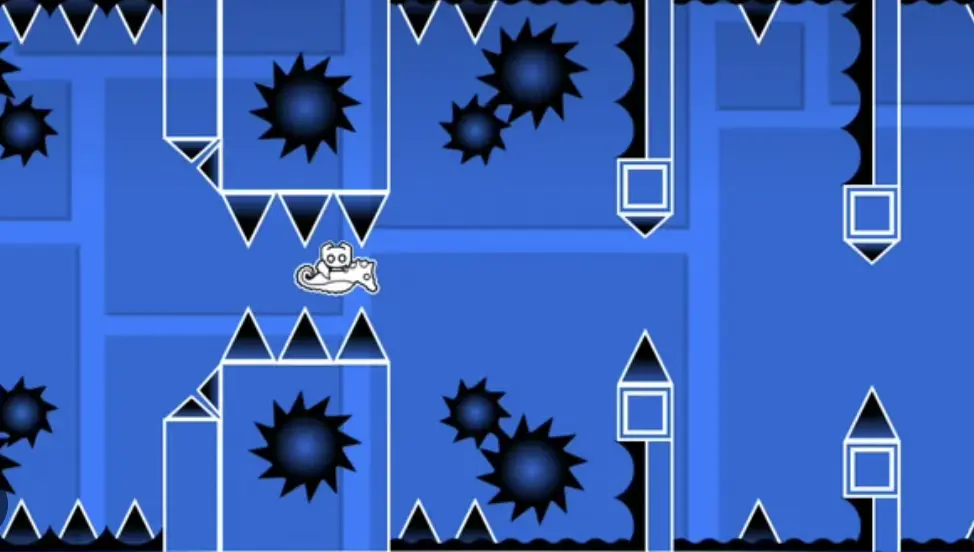
Why Ship Kills So Many Runs
Ship feels dangerous because it is the most obviously physical mode in Geometry Dash. You are always fighting two forces at once: upward thrust while holding and gravity while releasing. That sounds simple, but the transition between the two is where most mistakes happen.
- Ship keeps moving after your input changes, so late corrections are much more expensive than they look.
- Mini ship reacts far more quickly than normal ship, which punishes heavy hands instantly.
- High-speed Ship sections leave very little time to process portals, slopes, and ceiling pressure.
- Gravity portals can flip your control logic in a single moment, which is why many players die immediately after entering them.
How Ship Actually Works
Hold adds lift, release gives gravity back control
When you hold in Ship, you are applying upward thrust. When you release, gravity takes over again. The important part is that Ship has visible inertia. It does not instantly obey your last input the way Wave does. If you hold too long, the Ship keeps rising for a moment before it settles into the fall.
Why Ship and Wave feel completely different
Wave changes direction immediately. Ship does not. That is the root of most new-player confusion. If you wait until the Ship visually reaches the safe line before releasing, inertia often carries you another half-body upward and directly into the ceiling or spike row.
Normal Ship vs Mini Ship
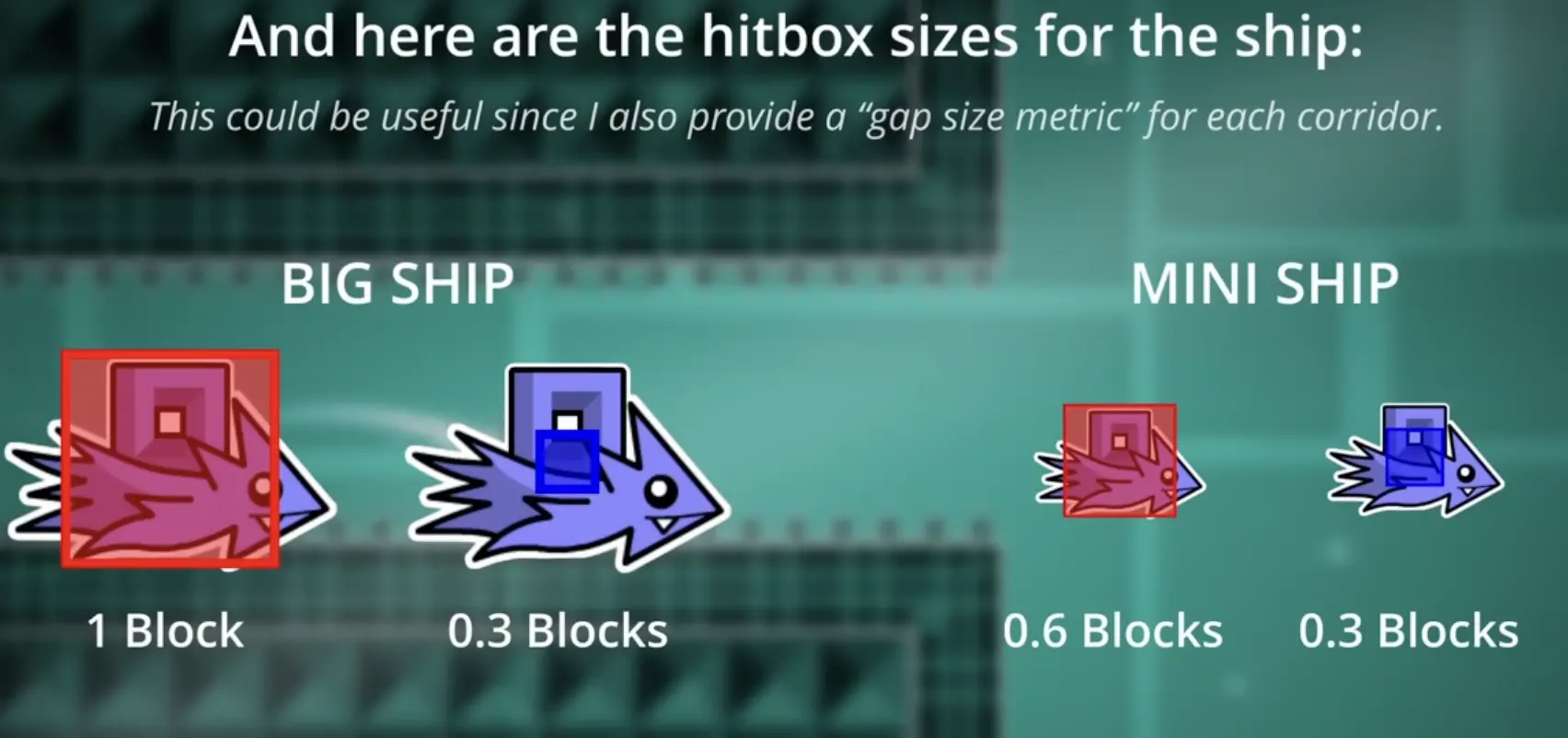
Normal Ship feels heavier and gives you more room to shape larger arcs with longer holds and releases. Mini ship feels much more sensitive. It reaches useful vertical movement faster, which is why it cannot be controlled with the same force as normal Ship. Mini ship rewards light micro-clicks and punishes sticky inputs.
Why speed portals change the feel so much
The vertical behavior of Ship stays familiar, but horizontal speed changes how your arc looks and how much time you have to react. At slow speed, the arc looks steeper and timing feels heavier. At high speed, the arc gets visually flatter, but the correction window becomes much smaller. This is why fast Ship sections often cause panic holds even when the core input logic has not changed.
The Biggest Ship Mistakes
- Over-holding because you release only after the Ship already looks aligned.
- Entering gravity portals with active upward thrust still applied.
- Trying to straight fly by force instead of by stable rhythm.
- Using normal-ship pressure on mini ship.
- Watching the icon too closely and creating nervous up-down shaking.
- Panic holding in high-speed sections because the screen feels too fast.
Why you keep flying too high
This is usually an inertia problem, not a courage problem. You release too late because you are waiting for visual confirmation. By the time the Ship looks correct, the arc is already committed. Good Ship play requires earlier release timing than most beginners expect.
Why gravity portals keep killing you
Many players enter the portal while still pushing upward. Once gravity flips, that same input logic becomes a crash. The cleanest way to survive these transitions is to enter the portal in a neutral state whenever possible, then rebuild rhythm under the new gravity instead of dragging the old one through the doorway.
Why straight fly collapses under pressure
Straight fly is not an aim test. It is a rhythm test. When players get nervous, their click length changes from input to input. The rhythm stops being even, the arc stops being balanced, and the Ship starts shaking until the run dies.
Why mini ship feels too floaty and too sensitive
Mini ship exaggerates every mistake. If your finger stays on the button even slightly too long, the Ship rises much farther than you intended. Most mini ship deaths happen because the player is still using normal-ship strength on a much more responsive form.
How to Practice Ship the Smart Way
Keep Ship sessions focused
For most players, 30 to 45 minutes of focused Ship practice is enough before the hand gets stiff and the timing gets ugly. Ship relies heavily on clean micro-control. Once your forearm is tense, your inputs stop being precise and start becoming survival panic.
Separate normal ship, mini ship, and straight fly
- Normal ship practice builds arc prediction and release timing.
- Mini ship practice builds light input control and anti-overhold discipline.
- Straight fly practice builds stable rhythm and balanced press-release timing.
Reverse practice is essential
If the hard Ship part is near the end of the level, do not only grind from 0%. Practice the final section first, then work backward. Late-run Ship deaths are often caused by pressure, not ignorance. Reverse practice reduces choke and makes the hardest section feel familiar instead of terrifying.
Learn the timing slowly before restoring full speed
If a Ship section feels impossible, slow it down first. Use practice tools to understand the exact hold length, release timing, and portal rhythm. Once the pattern makes sense, return to full speed and build consistency there.
Know when you are in a mindblock
If you start dying to a Ship section you normally clear without thinking, and your frustration keeps rising, stop. That usually means you are no longer learning. You are reinforcing tension. Switch modes, take a break, or come back tomorrow.
Best Official Levels to Practice Ship
The best Ship training path is not just about difficulty. It is about skill focus. Each official level below teaches a different part of Ship control, so use them as targeted training tools rather than random warmups.
Absolute Beginner
- Stereo Madness (85% - 100%): Great for learning the basic rise-and-fall feel of Ship without immediate claustrophobic pressure.
- Use it to understand inertia first, not to prove anything.
Portal Reading and Basic Control
- Clubstep (70% - 90%): One of the best official Ship classrooms in the game.
- This section teaches basic Ship control, early mini ship adjustment, and how to read gravity portals without panicking.
High-Speed Ship
- Electrodynamix (70% - 100%): Strong training for 3x-speed Ship, visual pressure, and narrow-space control.
- If your high-speed Ship always collapses, this is one of the best official places to fix it.
Portal Precision and Slope Reading
- Theory of Everything 2 (79% - 82% and 88% - 92%): Great for sloped corridors, gravity portal timing, and learning to release before the entrance instead of inside it.
Early Straight-Fly Pressure
- Deadlocked (10% - 15% and 42% - 46%): Useful for early high-pressure control, rapid terrain changes, and the beginnings of stable straight-fly rhythm under stress.
Optional Community Extras
- Ship by Jeyzor: Useful if you want a more isolated Ship practice environment outside official levels.
- Buff This: More of a stress test than a beginner trainer, but it can expose weak straight-fly rhythm if you are already advanced.
2.2 Era Changes That Matter for Ship
- Hardware myths matter less than before. With modern physics parity, Ship improvement depends more on rhythm and reading than on magic monitor numbers.
- Visual reading matters more than hard memorized screen position. Camera zooms, offsets, and locks make old screen-edge references less reliable.
- Modern Ship training should focus on reading obstacle relationships and portal timing, not just memorizing how long to hold.
In other words, the 2.2-era Ship player is not only learning how to press. They are learning how to read. That shift matters because camera tricks and visual disruption punish players who depend too heavily on old static references.
Fast Fixes for Common Ship Problems
If your Ship keeps rising after you let go
- Release earlier than feels natural.
- Stop waiting for the Ship to visually reach the safe line before letting go.
- Practice slower Ship arcs until the inertia lag stops surprising you.
If gravity portals keep killing you
- Try to enter the portal in a more neutral input state.
- Do not drag your old rhythm through the gravity flip.
- Rebuild control after the portal instead of forcing the same hold pattern through it.
If mini ship feels impossible
- Use lighter, shorter inputs than you think you need.
- Treat mini ship like a precision problem, not a confidence problem.
- Practice mini ship separately from normal ship whenever possible.
If straight fly is inconsistent
- Focus on even rhythm, not raw speed.
- Keep your hand loose instead of trying to muscle through the section.
- Short, controlled practice bursts usually work better than long frustrated sessions.
If your Ship keeps shaking up and down
- Move your eyes farther right instead of staring at the icon itself.
- Use larger route awareness and smaller corrections.
- Remember that over-fixing a small drift usually creates a bigger problem than the drift itself.
Final Advice: Ship Gets Easier When You Stop Treating It Like a Fight
A lot of Ship improvement comes from accepting that the mode has momentum. The more you try to force it into place at the last second, the worse your control gets. Smooth Ship play is not passive, but it is patient.
If a Ship section keeps beating you, ask a more specific question. Is the problem inertia? Portal entry? Mini ship sensitivity? Straight-fly rhythm? The more clearly you identify the failure, the faster the fix becomes.
FAQ
How do I straight fly consistently in Geometry Dash?
Straight fly is mostly a rhythm problem, not an aim problem. The key is keeping your press and release timing even instead of forcing the Ship into place with panic inputs.
Why does my Ship keep going up after I let go?
Because Ship has visible inertia. If you release too late, the arc is already committed and the Ship will continue rising for a moment before gravity fully takes over.
Why do gravity portals kill me so often in Ship sections?
Most players enter gravity portals while still holding upward thrust. The cleanest fix is to enter more neutrally, then rebuild your rhythm after the gravity change instead of dragging the old input through the portal.
How do I get better at mini ship in Geometry Dash?
Mini ship needs much lighter inputs than normal ship. Treat it like a micro-control problem, use shorter taps, and practice it separately instead of relying on your normal-ship muscle memory.
What is the best official level to practice high-speed Ship?
Electrodynamix is one of the best official levels for high-speed Ship practice because it forces you to control narrow arcs and stay calm under 3x-speed pressure.
Is Clubstep good for practicing Ship control?
Yes. Clubstep is one of the best official Ship training grounds because it combines narrow corridors, early mini ship adjustment, and gravity portal reading under real pressure.
How should I practice Ship sections in Geometry Dash?
Practice one Ship problem at a time. Separate normal ship, mini ship, and straight fly work, then use reverse practice on hard late sections so you build confidence where the pressure is highest.
Does Geometry Dash 2.2 change how Ship should be practiced?
Yes, a little. Modern Ship practice is less about memorizing static screen position and more about reading obstacle relationships, portal timing, and camera-related visual changes cleanly.