How to Get Better at Geometry Dash (Real Advice)
Want to get better at Geometry Dash without wasting thousands of attempts? This guide explains consistency, muscle memory, practice structure, and the real way players improve.
Most players think getting better at Geometry Dash is about reaction speed. It is not. Reaction matters, but real improvement comes from consistency. The players who improve fastest are not the ones with the craziest reflexes. They are the ones who learn patterns, build reliable timing, and stop treating every attempt like a random gamble.
That is also why progress can feel weird. Some days you play great. Some days you feel like you forgot how to click. That does not mean you are getting worse. It usually means improvement is happening the way it actually happens in Geometry Dash: slowly, unevenly, and through repetition that turns hard inputs into something your hands recognize.
Consistency matters more than reaction
The biggest shift most players need to make is this: Geometry Dash is not mainly a reaction game. It is a timing and pattern game. The goal is not to magically react faster every time you see a hard input. The goal is to make that input feel familiar enough that it stops being scary.
That is what consistency really means. A hard click becomes easier once you attach it to a visual cue, a rhythm, a speed change, or a pattern you have already seen enough times. Once that happens, the input stops feeling like luck.
Muscle memory is built, not bought
A lot of players waste time looking for shortcuts. New monitor. New setup. New input device. Those things can change how the game feels, but they do not replace practice. Better hardware does not hand you top-level control if your hands have never learned the timing windows for each gamemode and speed.
Real muscle memory comes from repetition on levels you can actually learn from. That usually means manageable levels first, not a giant leap into something way above your current skill. Ship, Wave, and other free-movement gamemodes get more stable when you stop blind-guessing and start recognizing where the click belongs.
Stop trying to jump too far ahead
One of the most common ways players sabotage their own improvement is by jumping too far up the difficulty ladder. A moderate jump is normal. That is just progression. But trying to leap from something comfortable into a level that is completely outside your range usually teaches frustration more than skill.
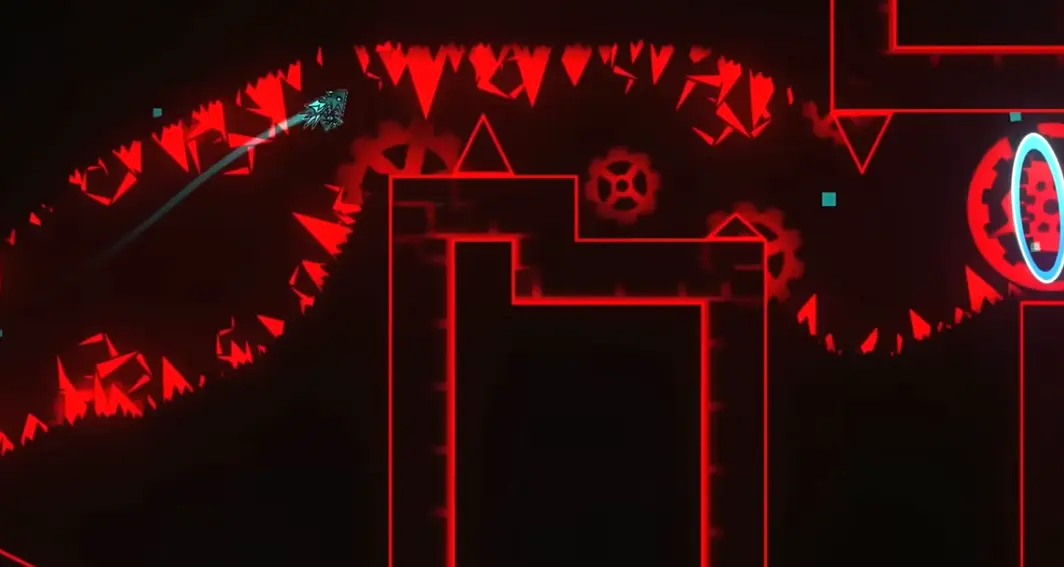
The problem is not ambition. Ambition is good. The problem is when the gap is so large that every attempt becomes chaos. You want a level hard enough to stretch you, not one so far ahead that you cannot tell whether you are learning anything at all.
Build a difficulty ladder instead of gambling on one giant jump
The cleanest way to improve is to build a ladder. Pick an end goal, then choose a few levels below it that train similar skills. If your goal is a wave-heavy level, play more approachable wave-heavy levels first. If your goal is a tight ship level, build toward it with levels that teach smooth control and stable flight.

This works because Geometry Dash improvement is specific. You do not just become “better at the game” in a vague way. You become better at straight fly, wave control, fast transitions, memory, timing density, or keeping calm deep into a run. A good ladder lets you train those pieces on purpose.
Practice the level in sections, not as one giant wall
If you want to improve quickly, stop thinking about a hard level as one thing. Break it into parts. Learn where the real chokepoints are. Then practice those parts until they stop feeling dramatic.
This is one of the biggest differences between players who improve steadily and players who just rack up attempts. Good practice is not evenly distributed. Hard sections need more attention than easy sections. If one part is clearly responsible for most of your deaths, that is where your effort should go.
Do not only practice from 0%
A lot of players overvalue full runs from the beginning. Those runs matter, but they are not the only thing that matters. If you only play from 0%, the back half of a level can stay undertrained for much longer than you realize.
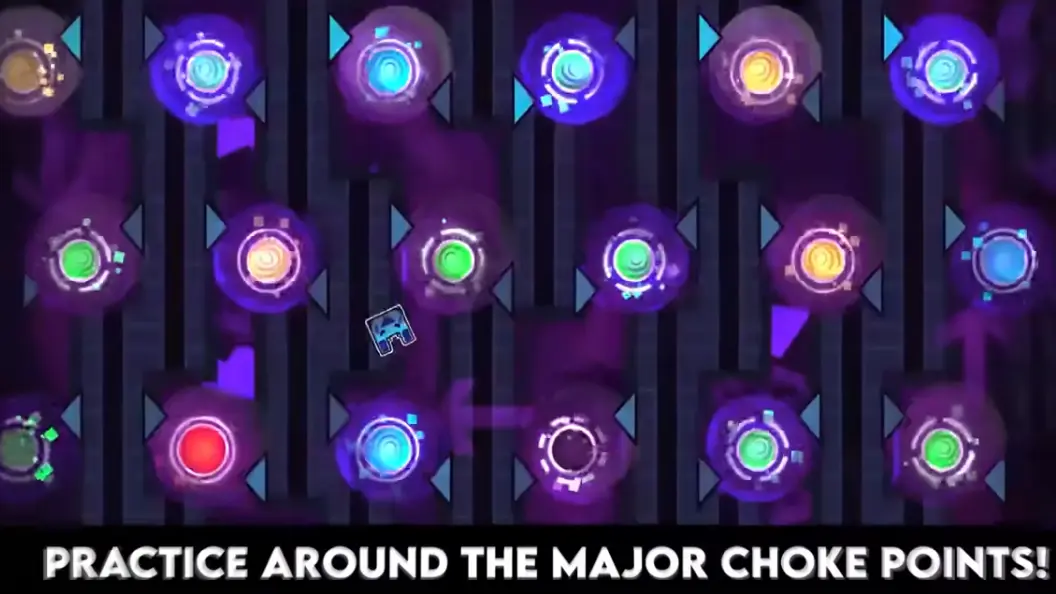
That is how you get those awful sessions where the ending still feels foreign even though your early consistency looks good. A stronger method is to balance both. Play from 0% enough to keep the opening stable, but also use start positions or checkpoint-based practice to get comfortable with the later sections before they become panic territory.
For most players, later parts deserve more intentional practice than they get.
Why sleep and rest seem to make levels easier
Every Geometry Dash player has had this experience: a level feels impossible at night, then strangely more manageable the next day. That is one reason improvement can feel delayed. Your brain and hands do not always show progress immediately.
This is one of the most consistent observations in the Geometry Dash community. Players report it constantly in Reddit threads, Discord servers, and level completion videos. The pattern is reliable enough that it probably reflects the kind of consolidation sleep does for motor memory, even if most players only describe it as “I woke up and the level felt easier.”
You should not expect a single long session to solve everything. Sometimes the best thing you can do after real practice is step away, sleep, and come back with a cleaner head. Progress often shows up after recovery, not just during grinding.
Mind blocks are real, and forcing through them usually makes them worse
A mind block happens when a part of a level starts feeling cursed. You know what to do, but the moment you reach that click, your confidence disappears. You expect failure before it even happens.
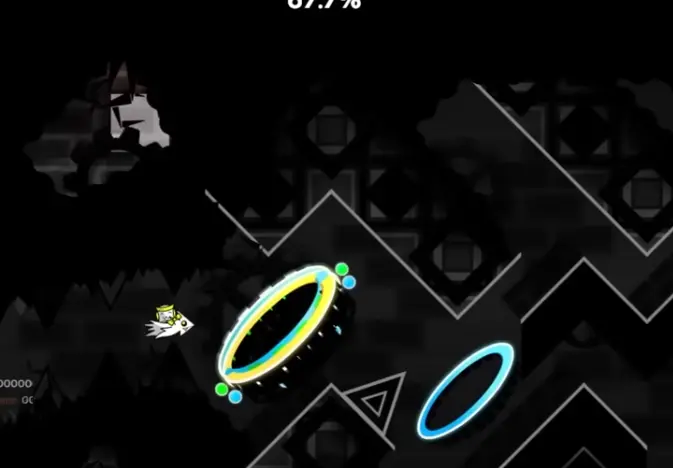
The worst response is usually to keep smashing your head into the same section while tilted. If nothing is going your way for a long stretch, stop. Take a break. Come back later. Burning yourself out rarely fixes a mental block. It usually hardens it.
How long should you practice?
There is no magic number, but there is a useful signal: when you stop noticing your own mistakes, the session is over. Not because you are done, but because you stopped learning.
Most productive practice sessions for hard levels fall between 20 and 45 minutes of focused work. After that, diminishing returns hit fast, especially for tight Wave or Ship sections that demand fresh input accuracy.
The players who improve fastest are not always playing the most hours. They are usually playing fewer, sharper sessions and letting recovery do the rest.
The real skill is learning why you died
A lot of players confuse attempts with learning. They are not the same. Dying fifty times at the same spot does not automatically teach you anything unless you understand what changed.
Was it a bad visual read? A timing error? A panic hold in Ship? A Wave overcorrection? The players who improve fastest are not always the ones who play the most. They are the ones who actually pay attention to why a mistake happened and adjust their next attempt.
Motivation matters more than people admit
Skill practice and level knowledge are not always enough on their own. If you have no real reason to care, the game starts feeling like a chore. That is when burnout shows up fast.
Your reason does not have to be dramatic. Maybe you want your first Demon. Maybe you want to get clean at Wave. Maybe you just want to stop choking endings. That is enough. The point is that improvement works better when you actually care about where it is going.
FAQ
How do you get better at Geometry Dash fast?
You improve fastest by focusing on consistency instead of raw reaction, practicing the hardest sections first, and building your way up with manageable levels instead of giant difficulty jumps.
Is Geometry Dash mostly reaction or muscle memory?
For most players, Geometry Dash is much more muscle memory, timing, and pattern recognition than pure reaction speed.
Why do I play worse the day after a breakthrough in Geometry Dash?
Because your brain is still consolidating the new pattern. A breakthrough day often pulls everything forward at once, and the next session can feel like a reset because the skill is not stable yet. This is extremely common in rhythm games. Give it one more session before deciding you lost progress.
Should I only practice from 0% in Geometry Dash?
No. Full runs matter, but you should also practice later sections and hard chokepoints directly so the second half of the level does not stay undertrained.
Does taking a break help in Geometry Dash?
Yes. Breaks help reduce burnout, and many players come back more stable after stepping away instead of forcing bad sessions longer.
Next step
If you want to get better at Geometry Dash, stop waiting for improvement to happen by accident. Build consistency. Practice the parts that actually kill you. Use levels that teach the next skill you need. Then rest enough to come back sharp. That is what real progress looks like.