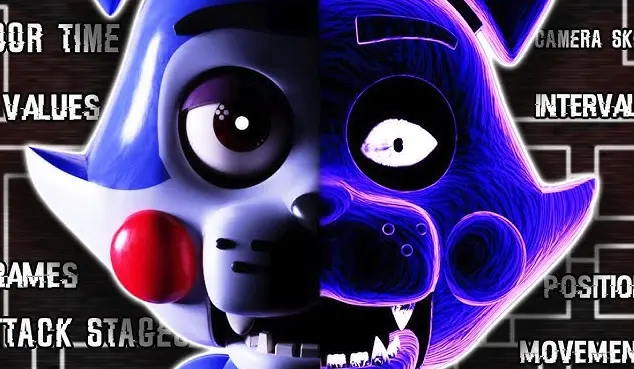
Clock in, shut the office behind you, and get real comfortable with the sound of your own bad decisions. Five Nights at Candy's takes the familiar night guard setup and tightens the screws with its own cast of hostile animatronics, a creepier restaurant vibe, and that nasty little resource squeeze where every camera check feels justified right up until your power meter starts glaring at you.
The fun comes from building a survival rhythm that is half discipline, half paranoia. You scan the cameras, track movement, and slam blast doors only when the situation truly deserves it, because wasting power early is basically signing tomorrow morning's death certificate. Each night turns into a grim balancing act: spend too much energy and you are doomed later, react too slowly and you are doomed immediately. Great stuff, honestly.
horrorInstant play
💡
Editor's Note:Nothing builds character quite like babysitting murderous restaurant mascots with an electric bill hanging over your head.
Playing: Five Nights at Candy's
How to play
Controls
Use your mouse to switch through security cameras, watch animatronic movement, and keep track of which hallways are becoming a problem.
Click the blast doors only when a threat is close enough to matter, because every extra second they stay shut drains precious power.
Core rules
Your power supply is limited for the whole night, so cameras and blast doors must be used with purpose instead of panic.
Animatronics move through the building over time, and surviving depends on spotting their routes early rather than reacting at the last possible second.
Goal
Make it through all five nights at Candy's Burgers and Fries by managing power, monitoring cameras, and blocking animatronics before they reach your office.
Tips & tricks
Open with a light touch, not a surveillance binge
The first stretch of each night is where players quietly sabotage themselves. You do not need to admire every camera angle like you are judging a restaurant renovation show. Do short, deliberate checks, confirm where the main threats are starting from, and get back out. Saving that early power gives you room to survive when the pace gets ugly later.
A repeatable camera loop beats random heroics
Mid-night survival gets way more consistent once you stop checking rooms in a panic-generated order. Build a simple scan pattern and stick to it so you can notice changes immediately. When a route looks dangerous, then you adjust. That routine lets you read movement faster and wastes a lot less energy than frantic bouncing between feeds.
Near 6 AM, the blast doors become a scalpel
Late-game mistakes usually come from treating the doors like permanent shelter. They are not. They are emergency tools. In the final minutes, keep them open unless a threat has actually reached the point where blocking matters. A few clean, well-timed closures will carry you farther than hiding behind shut doors while your remaining power evaporates for no reason.
Why it’s fun
It turns tiny decisions like one extra camera check or one late door click into huge, sweaty consequences.
The mix of power management, route tracking, and split-second defense creates that perfect survival-horror loop where every successful night feels stolen.
FAQ
Que faut-il faire dans Five Nights at Candy's ?
Vous incarnez un gardien de nuit chez Candy's Burgers and Fries. Votre but est d'utiliser les caméras, les portes blindées et une énergie limitée pour survivre face aux animatroniques hostiles.
Five Nights at Candy's est-il un fan game de FNaF ?
Oui. C'est un jeu de survival horror créé par des fans et inspiré par la formule Five Nights at Freddy's, mais il possède son propre univers, ses personnages et son propre style de tension.
Comment fonctionnent les portes blindées dans Five Nights at Candy's ?
Les portes blindées (blast doors) empêchent les animatroniques d'atteindre votre bureau. Cependant, les utiliser consomme de l'énergie : elles ne doivent donc être fermées que lorsqu'une menace réelle est proche.
Pourquoi est-ce que je manque de batterie dans Five Nights at Candy's ?
Cela arrive généralement quand les caméras sont consultées trop souvent ou que les portes restent fermées plus longtemps que nécessaire. Une surveillance efficace et un timing précis sont les clés.