How to Stop Raging at Geometry Dash (Break the Mental Block)
Smashing your keyboard at 98%? Learn how to stop raging at Geometry Dash, break mental blocks, enter the flow state, and actually enjoy the grind.
Gamer rage is one thing, but Geometry Dash rage is a beast of its own. We have all been there: your heart is pounding, your hands are sweating, and suddenly you crash at 98% because of a jump you have done perfectly a hundred times before. The urge to launch your mouse across the room feels incredibly real.
That is why this article exists. Geometry Dash does not just test timing. It tests emotional control. If you want to beat harder levels without turning every session into a meltdown, you need more than practice. You need a way to stop feeding the rage loop.
The Copium Trap: 3 toxic excuses you need to stop making
When we die repeatedly, the brain looks for a story that protects the ego. In Geometry Dash, that usually means some form of copium. If you want to stop raging, you first have to catch yourself making excuses that feel comforting but keep you stuck.
- The “I’m not even trying” excuse: You tell yourself you could beat the level easily if you really locked in, so dying does not count. This protects your pride, but it also stops you from actually focusing.
- The hardware blame game: You blame a lag spike, your mouse, your monitor, or your setup every time something goes wrong. Hardware can affect feel, but in the 2.2 era and especially after 2.208 added more precise gameplay options, the old “my setup is the only reason I died” excuse is weaker than ever.
- The nihilism approach: You joke that none of this matters because it is just a cube game and the universe is meaningless anyway. Funny? Yes. Useful? Not even a little.
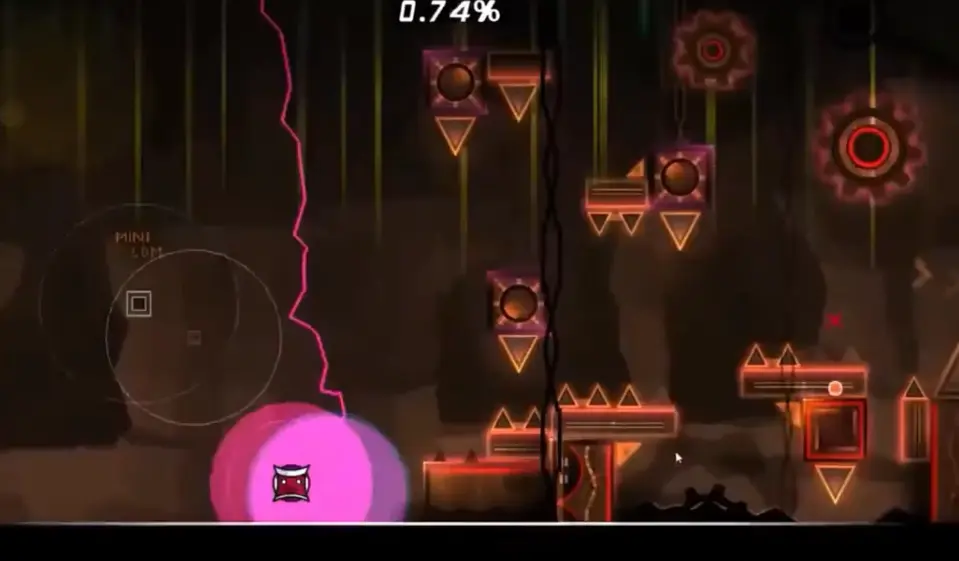
The point is not to be cruel to yourself. The point is to be honest. The faster you stop defending your ego, the faster you can start fixing the real problem.
What is a mental block? (The real enemy)
A mental block happens when a specific part of a level, or sometimes an entire level, starts feeling cursed. You know what to do. You may have passed the part before. But once you approach it, your body changes. Your hands tense up. Your rhythm gets ugly. You die in a way that feels irrational.
This usually comes from predictive failure. You are no longer just playing the section. You are expecting to fail it. That expectation changes the way you click, and the click becomes worse before you even reach the obstacle.
Mental blocks tend to cluster around two moments: the section right before your previous best, and any section where you once had a spectacular death. Both work the same way. Your brain files the memory as dangerous and starts tightening your inputs before you even arrive. The result is a self-fulfilling prophecy. You expect the death, so your hands create it.
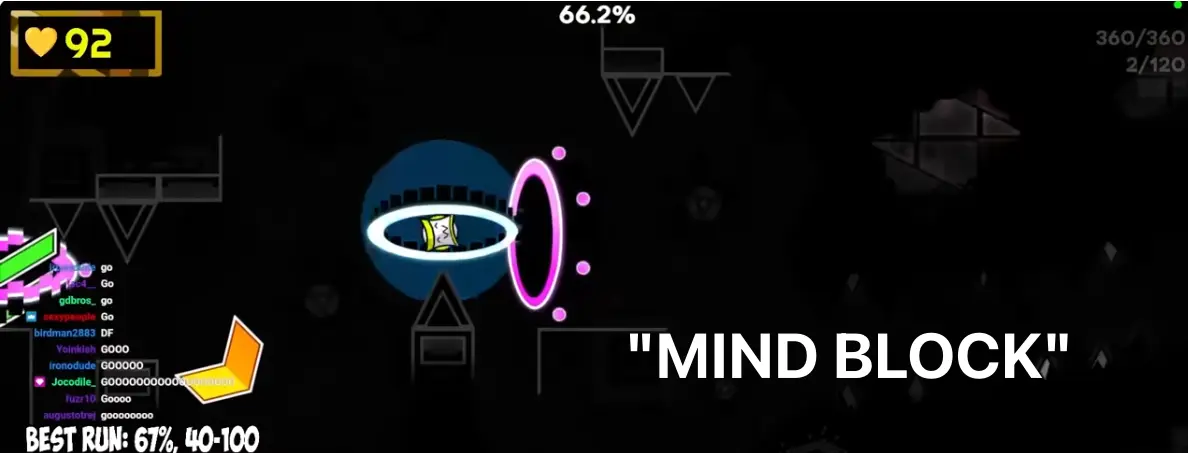
The only way to disrupt this is to make the section boring again. That usually means going back to Practice Mode and grinding that exact section until it stops feeling dramatic. Not until you pass it once. Until passing it surprises you less than failing it.
Flow State is not magic. It is familiarity.
A lot of players talk about Flow State like it is some mystical top-player mode you unlock when you become cracked at the game. It is not. Flow State is what happens when a level becomes familiar enough that your brain stops trying to consciously plan every click.
The practical sign you are in Flow State is simple: you stop thinking about what comes next. You are just responding. Your hands are moving with the music, the spacing, and the pattern you already know.
That only happens after enough practice that the level stops feeling like a test. Which is why “grind the section until it is boring” is not just old-player advice. It is the actual mechanism. Familiarity reduces drama. Reduced drama reduces panic. Reduced panic lets your real timing show up.
This is also why experienced players can die a thousand times and still keep going. They are not interpreting every death the same way newer players do. They are reading attempts as data, not as proof that they are terrible.
Practical anti-rage hacks you can use right now
Mindset matters, but some anti-rage fixes are physical and immediate. If you are already tilted, these work faster than trying to lecture yourself into calmness.
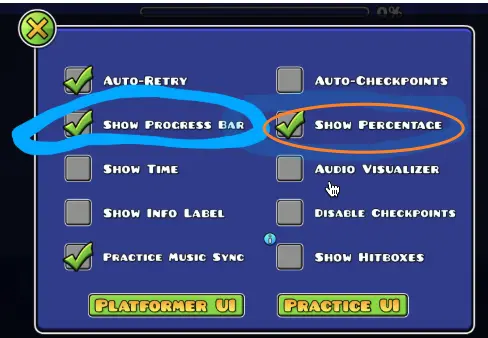
- Hide the percentage counter: Watching the number climb toward 90% triggers adrenaline. That physical spike is enough to tighten your hands and ruin an easy click. If possible, turn it off or block that corner of the screen.
- Use the Rule of 3: If you die at the exact same obstacle three times in Normal Mode, you are not allowed to brute-force it anymore. Go to Practice Mode and fix the section first.
- Stop playing before burnout sets in: If nothing is going your way for a long stretch, stop. Do not try to overpower a mental block with anger. That usually turns one bad session into three.
- Track your best percentage somewhere visible: Rage often comes from feeling like nothing is happening. When you can see that last week your best was 67% and today it is 74%, the emotion changes. You are not failing. You are building.
A sticky note, a notes app, a phone screenshot, a text file. The format does not matter. The visible evidence does. Progress feels less invisible when you can actually see it.
Why you choke at the end of levels
End-level choking feels personal, but it is extremely common. The reason is not that you suddenly become bad at 92%. The reason is that the run starts feeling important.
Once the percentage climbs high enough, your nervous system notices. You start thinking about the completion before you have earned it. The body responds with adrenaline. Your hands get tighter. Inputs lose their natural timing. That is why a jump you passed cleanly all session can suddenly feel impossible at the end.
The fix is not motivational quotes. The fix is removing what makes the ending feel special. Hide the percentage. Practice the final 20% in isolation. Repeat the ending until it feels as ordinary as the beginning.
Is it normal to play worse after a near-complete run?
Yes. Very normal. After a personal best, your nervous system is usually still elevated. You feel excited, annoyed, desperate, or all three at once. The next few attempts often feel worse because you are not playing from a calm baseline anymore.
That is not regression. It is temporary noise. Most players notice that their consistency settles again after a short reset or after enough attempts for the emotional spike to fade.
FAQ
Why does Geometry Dash make me so angry?
Because the game combines instant death, lost progress, and very precise timing. That creates a strong frustration loop, especially when you know you were close.
What is a mental block in Geometry Dash?
A mental block is when a part you know how to beat starts feeling impossible because anxiety and predictive failure tighten your inputs before the obstacle even arrives.
How do I stop getting nervous at the end of a level?
Hide the percentage counter, practice the final 20% of the level in isolation, and repeat it until the ending stops feeling special.
Why do I choke at the end of a level every time?
Because the percentage climb triggers adrenaline. Your hands tighten, your rhythm gets worse, and you start reacting to the idea of winning instead of the actual pattern in front of you.
Is it normal to play worse after a near-complete run?
Yes. After a personal best, your emotional state usually stays elevated for a while. The next few attempts often feel worse, not because you got worse, but because your body is still carrying the pressure of the run.