Best Platformer Demon Levels to Play Right Now
Not sure which Platformer Demon to play next? This guide matches levels to what you actually need - first Moon, tech building, or first Extreme - with IDs included.
Platformer Mode is not a side attraction anymore. In 2026, it has its own culture inside Geometry Dash: its own creators, its own skill ladder, and its own arguments about what actually counts as easy. Classic Demons still test rhythm under auto-scroll pressure. Platformer Demons test movement, patience, route reading, momentum control, and whether you can stay calm when the game finally lets you decide the pace.
That is why bad recommendations waste so much time. A level can be famous and still be a terrible pick for you right now. So this guide is built around the question that actually matters: which Platformer Demons are worth playing depending on what you need - your first Demon Moon, your first real tech level, your first boss-fight challenge, or your first Extreme.
Why Platformer Demons feel different from Classic Demons
Classic Demons are built around surviving a timeline. Platformer Demons are built around solving space. That one difference changes everything. You can stop, line up jumps, read the room, and decide when to commit. That does not make platformer levels easy. It makes them a different kind of hard.
This is also why Platformer Mode has already developed its own ecosystem. Some levels are precision gauntlets. Some are movement labs. Some are boss fights. Some feel closer to indie platformers than to old-school Geometry Dash. If you still think Platformer is just Classic Mode without auto-scroll, you have not played enough of it yet.
The easiest Platformer Demons to start with
Your first Platformer Demon should do one thing above all else: let you think. A good entry level gives you enough room to line up jumps, enough structure to understand what killed you, and enough pressure to feel like you actually earned the Moon.
1. Idling Somewhere (Easy Demon, ID: 99170473)
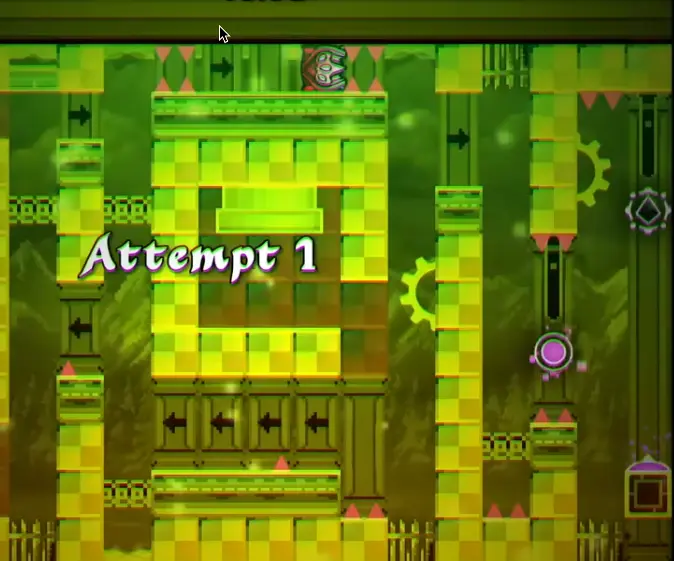
Idling Somewhere is still the cleanest answer to "What should my first Platformer Demon be?" because it almost never forces panic. It is short, readable, and calm in a way most first-Demon recommendations fail to be. You are allowed to line things up. You are allowed to breathe. That matters more than people think.
What makes this level work is not that it is free. It is that it rarely lies to you. If you die here, you usually know why. That is the exact quality a first Platformer Demon should have.
The first real choke point is the double-orb stretch after the third platform. Newer players usually misread it two or three times in a row because the level suddenly asks for commitment after spending so long letting you line everything up. Slow down, let the spike cycle finish, then take the orbs cleanly instead of trying to force the whole section in one panicked motion.
2. Forsaken City (Easy Demon, ID: 97906220)
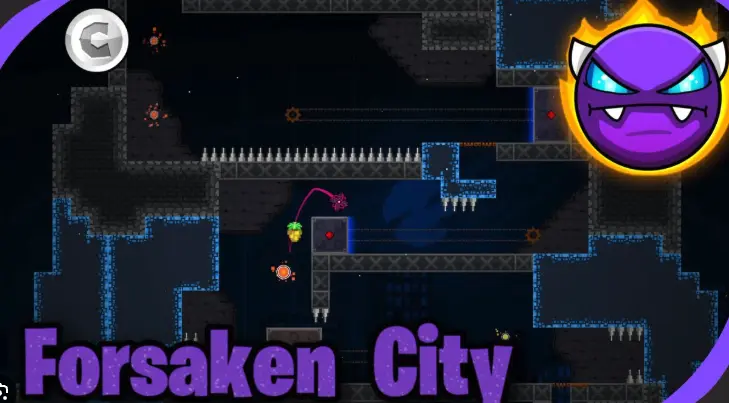
Forsaken City belongs in the starter conversation, not in some vague "play this later when you are worthy" category. Yes, it is one of the most artistically memorable Platformer Demons because of the Celeste tribute angle. But it is also a genuinely good Easy Demon entry point.
That is what makes it special. It gives you a beginner-friendly checkpoint structure, clean movement language, and a sense that Platformer Mode can be more than a technical side mode. It feels like a level someone cared about building, not just a test someone threw together.
Where players usually trip is not raw difficulty. It is hesitation. The visual style can make people second-guess when to commit. Once you trust the route and stop second-guessing every ledge, the level usually feels easier than its atmosphere suggests.

3. Catharsis (Medium Demon, ID: 99357048)
Catharsis is a great Medium Demon because it teaches the thing most players are worst at: patience. Low gravity gives you more time than your instincts think you have, which means the level becomes dramatically easier the moment you stop trying to outrun it.
This is the kind of level that punishes haste more than lack of skill. The jumps are not trying to overwhelm you. They are testing whether you can slow down, line things up, and stop inventing pressure where the level did not actually put any.
The robot section is where Medium Demon reality finally kicks in. The second platform is the one that catches most people, because half-jumps keep getting them killed. Treat it as a committed short jump instead of a nervous in-between press, and the whole sequence becomes much more stable.
The best Platformer Demons for building real skill
Some levels are not just good clears. They are good teachers. These are the levels that actually sharpen mechanics you will need again later.
4. SpeedTek (Hard Demon, ID: 97812307)
SpeedTek is one of the best movement teachers in all of Platformer Mode. It is not just a Hard Demon. It is a lesson plan. Dash orb timing, slope tech, momentum carry, directional control - the whole level is built around teaching you one piece at a time, then checking whether you actually learned it.
The reason this level feels weird at first is simple: most players try to control it too much. SpeedTek gets easier the moment you stop fighting the momentum and start reading what the section is trying to preserve. If you keep trying to "fix" the movement manually, you make it uglier than it needs to be.
The real wall is slope tech near the end. The second-to-last slope is where a lot of runs fall apart, because the momentum wants to carry you farther than your eyes expect. The correct rhythm feels slightly earlier than instinct says. If you wait until the motion looks perfect, you are already late.

5. Cosmic Curse (Insane Demon, ID: 98707083)
Cosmic Curse is where platformer difficulty starts looking like a different genre entirely. This is not just a precision level with harder jumps. It is a boss-fight level, which means difficulty comes from pattern understanding, positioning, and knowing when to play for survival versus damage.
That is why it is such a good Insane recommendation. It is still hard, but it is hard in a way that can be solved. Once you understand the phase structure and stop trying to brute-force every moment, the level becomes much more manageable.
The trap is that the first half can feel strangely chill, and then the black-hole pressure and later phases suddenly start punishing sloppy movement. Players who try to wing it get rolled. Players who start treating it like a real boss fight improve much faster.
The most approachable Extreme Platformer Demons
Extreme Platformer Demons are still Extreme Demons. They are not easy. But Platformer Mode changes how that difficulty feels. Short checkpoints, practice-friendly layouts, and route learning can make some Extreme platformers far more approachable than their Classic equivalents.
6. Storm Front (Extreme Demon, ID: 100486532)
Storm Front is the classic first Extreme recommendation for a reason. Not because it is harmless, but because the pain stays productive. The checkpoints are short. The tech is readable. And the level lets you learn one small problem at a time instead of making every death feel like a full reset tax.
This is the sort of Extreme where you will die a lot per checkpoint and still feel like the session is going well. That is a huge deal. A first Extreme needs to be hard enough to matter and structured enough that each death actually teaches.
The checkpoint that really teaches discipline is the chained dash-orb section around the fourth checkpoint. Most deaths there come from hitting the second orb too early out of panic. Let the first launch settle, land cleanly, then trigger the next input. The level gets much more stable once you stop trying to brute-force that rhythm.
7. Robot King (Extreme Demon, ID: 99927952)
Robot King is the other serious answer if you are asking for the easiest Extreme Platformer Demon. This is the point where skill set matters more than the difficulty face. If your control is naturally cleaner in Robot-style movement, there is a real chance you will find Robot King more comfortable than Storm Front.
That is an important lesson for the entire platformer ecosystem. Difficulty is more movement-specific here than many players expect. The easiest level for you is not always the one the community repeats the loudest. It is the one that speaks your movement language.
How to choose your next Platformer Demon
Do not choose only by difficulty face. Choose by what you actually need.
- I want my first Demon Moon → Start with Idling Somewhere.
- I want an easy first Demon that also shows what Platformer Mode can do → Play Forsaken City.
- I want to build consistency and patience → Move into Catharsis.
- I want to learn real movement tech → Play SpeedTek.
- I want a strategy-heavy challenge instead of pure panic precision → Try Cosmic Curse.
- I want my first Extreme Platformer Demon → Ask what you are better at first.
- Better at Robot-style timing? → Try Robot King.
- Better at fast, short tech sections? → Try Storm Front.
That is the real decision tree. The best level is not always the hardest one you can barely survive. It is the one that teaches the next thing you actually need.
FAQ
What is the easiest Platformer Demon in Geometry Dash?
Idling Somewhere is still one of the most widely recommended first Platformer Demons because it is short, calm, and gives players time to line up jumps instead of forcing panic movement.
Is Forsaken City an Easy Demon?
Yes. Forsaken City is commonly treated as an Easy Demon platformer, which is part of why it is such a useful recommendation: it is approachable while still feeling like a real showcase level.
What is the easiest Extreme Platformer Demon in Geometry Dash?
Storm Front is one of the most common answers, although many players also argue for Robot King depending on whether their skill set is stronger in that style of movement.
What is Coyote Time in Geometry Dash?
Coyote Time is a small leniency window in Platformer Mode that lets you still jump for a few frames after leaving a platform. It is one of the reasons edge jumps feel fair instead of purely pixel-perfect.
How are Moons different from Stars in Geometry Dash?
Stars are tied to Classic auto-scrolling levels, while Moons are the progression reward used for Platformer levels.
Are Platformer Demons easier than Classic Demons?
Not automatically. But they are often more learnable because you control the pace, get checkpoints, and can line up jumps instead of surviving one uninterrupted run.
Do Platformer Demons count toward the main Demonlist?
No. Classic Demons and Platformer Demons use separate list ecosystems. The main Pointercrate Demonlist tracks Classic Demons, while Platformer Demons have their own ranking scene through pemonlist and gdplatformerlist.
How do I find a Platformer level ID in Geometry Dash?
The easiest way is to search the level on community list sites or platformer-focused guides first, then copy the ID into the in-game search.
Should I practice Platformer Demons differently from Classic Demons?
Yes. Platformer levels reward checkpoints, route planning, repeated section clears, and calm alignment much more aggressively than Classic levels do.
What if SpeedTek feels impossible at first?
That is normal. SpeedTek is a tech tutorial disguised as a Hard Demon. If the momentum feels wrong, the problem usually is not your reactions. It is that you are still fighting the slope and dash orb physics instead of letting them carry you.