Color Block Jam Hybrid-Casual Playbook: Core Loop + Monetization Flywheels
A practical hybrid-casual playbook inspired by Color Block Jam: 7-day UA pulse, a 4-track IAP model, and flywheels that turn a simple puzzle into repeatable revenue.
This post breaks down a hybrid-casual playbook inspired by Color Block Jam—how a “5-second-to-learn” sliding puzzle can support deeper monetization with flywheels in UA, ad creatives, level pacing, and shop design. Treat this as a framework you can adapt, not a promise of identical results.
The core thesis
- A lightweight puzzle core can still produce heavyweight monetization if the surrounding systems create repeatable “purchase moments”.
- The goal isn’t complexity—it’s reliability: predictable failure points, clear value props, and strong creative → retention feedback loops.
- Authenticity matters: showing real difficulty (and real failure) can improve LTV by aligning user expectations.
1) The winning move: a 5-second-learn puzzle core
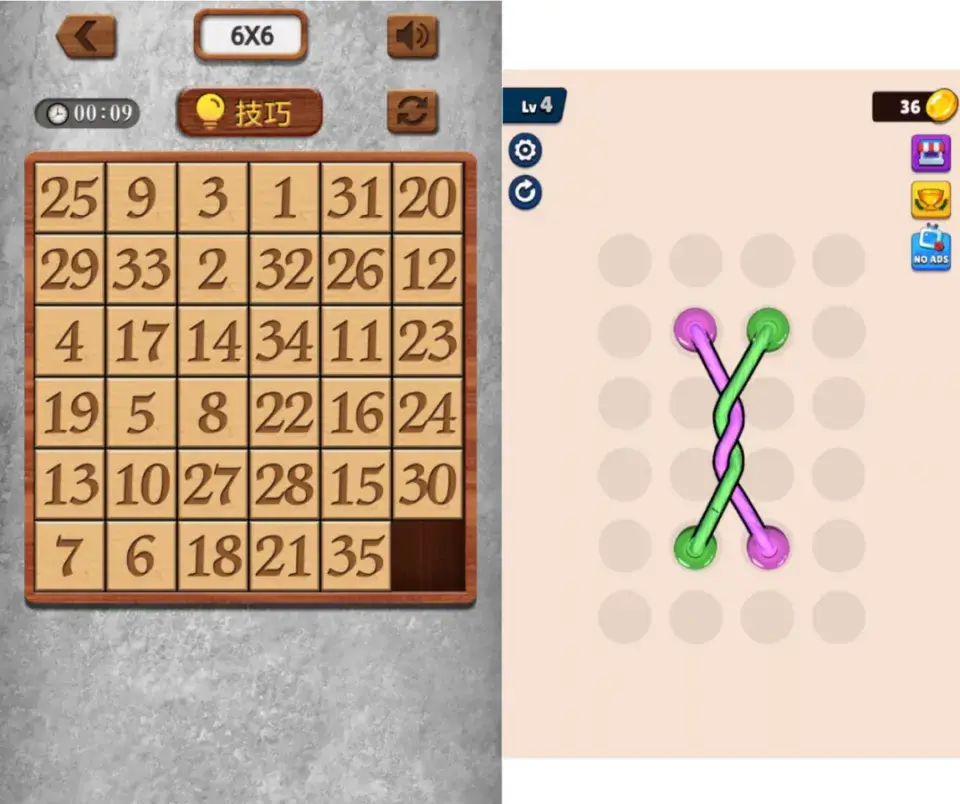
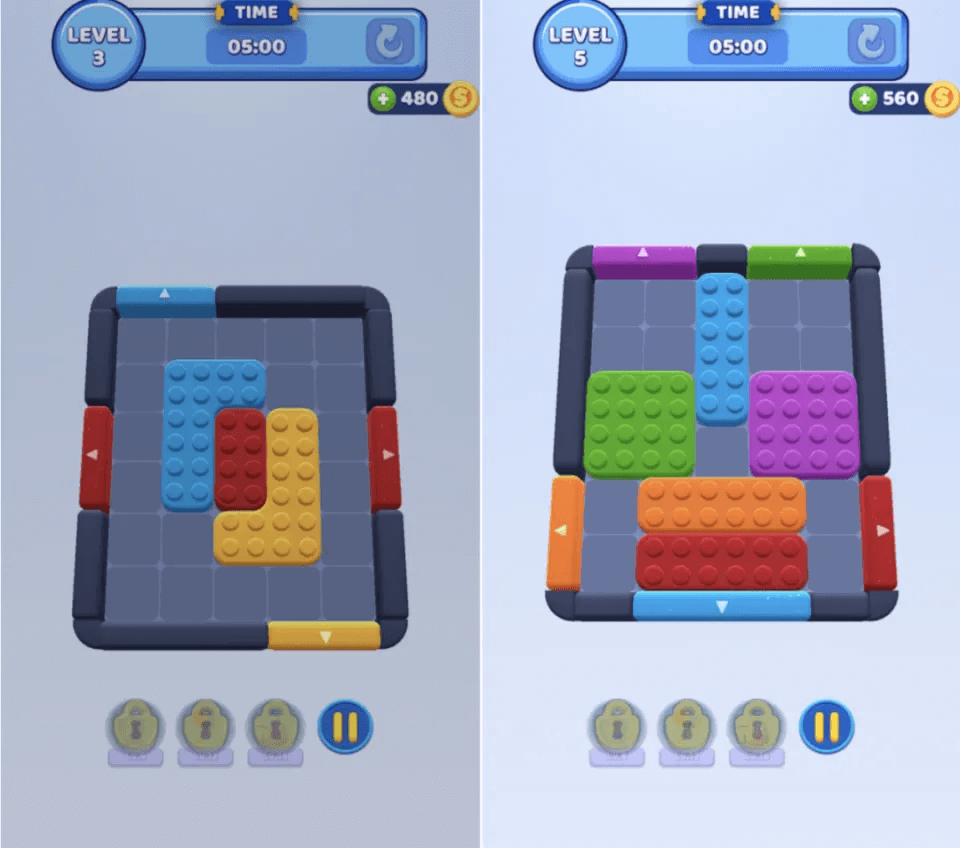
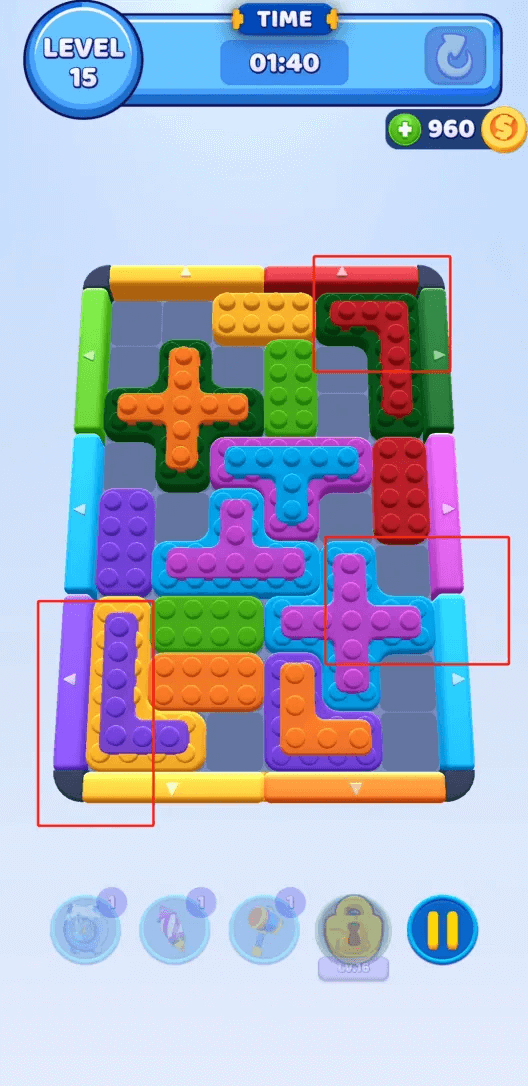
The core loop is a sliding-block puzzle that’s instantly understandable, but hard to master. The design goal is fast onboarding with real failure moments—players should feel they made the mistake, not the game “cheated” (even when the ramp is intentionally sharp).
- Onboarding: learn the rules in ≤ 5 seconds.
- Depth: mastery requires planning (not just swiping).
- Failure: early levels feel fair, then a controlled difficulty spike creates the first monetization moment.
2) The five growth flywheels (copy & adapt)
Flywheel A: 7-day “pulse” UA calendar
- Run a weekly scale-up (Mon–Sun), then cool down for 2–3 days.
- Use cooldown to swap creatives, patch friction, and re-balance early levels.
- The point is not constant spend—it’s a reliable test-and-scale rhythm.
Flywheel B: 100% authentic level ads
- Show real gameplay with real failure—don’t over-polish into a fake experience.
- Aim for one sharp hook: “clear the blocks / test your brain / can you solve it?”
- If the ad matches reality, retention improves and UA budgets can expand safely.
Flywheel C: 3 easy levels → 1 forced fail (first purchase moment)
- Start with a smooth tutorial ramp that builds confidence.
- Introduce a designed fail (timer cut / move limit) around Level 4–6.
- Offer a simple purchase: +moves / booster / remove ads bundle—make the value obvious.
Flywheel D: a four-track IAP shop
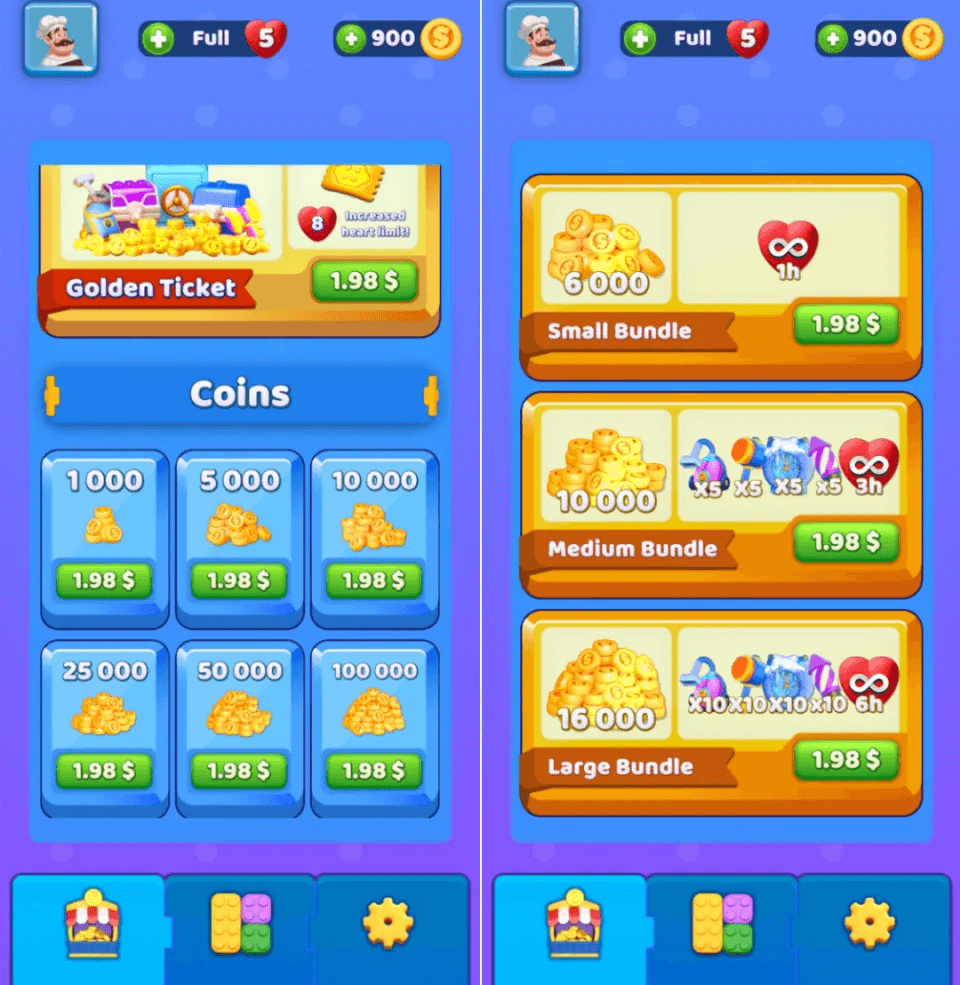
A strong shop isn’t about more SKUs—it’s about covering different buyer intents. A clean four-track structure is often enough.
- Remove-ads bundle (low-friction starter offer).
- Direct currency packs (simple, scalable).
- Currency + boosters bundles (pain-point targeted).
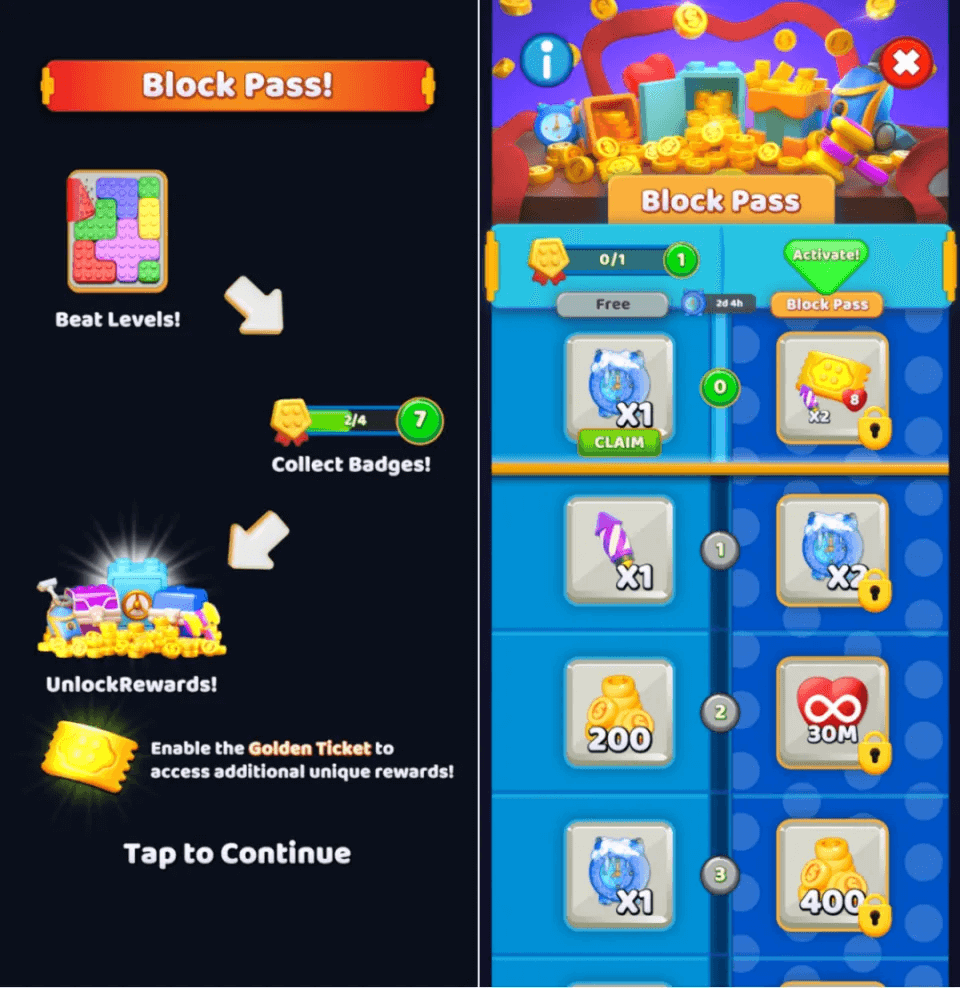
- Season pass / ticket (mid-session unlock that lifts long-term ARPDAU).
Flywheel E: light core, deep obstacles
- Keep the base mechanic simple; add depth via obstacles (locks, layered constraints, peeling mechanics).
- Reduce newbie frustration with generous hitboxes / clear affordances.
- Design levels so failure teaches (players should know what to try next).
3) KPI checkpoints (use as rough targets)
Numbers vary by region, network, and creative quality. Use these as checkpoints to guide iteration—not as promises.
- Retention: strong D1 from a fast-learn core; D7 depends on depth + level pacing.
- Monetization: first purchase moment should occur early (Level 4–6) with a clear value prop.
- UA: spend should scale only when creative + early retention remain stable.
4) Rapid execution checklist (4 weeks)
- Week 1–2: prototype the core loop + 20 levels with a visible difficulty ramp.
- Week 2: produce 5 authentic creatives (show real failure + real solution).
- Week 3: implement the 4-track shop + first purchase moment (Level 4–6).
- Week 4: add a pass/ticket + A/B onboarding friction and offer timing.
- Ongoing: run UA pulse cycles and iterate creatives weekly.
FAQ
- Do authentic ads really matter? → Yes. Mismatch causes churn; authenticity improves retention quality and stabilizes UA scaling.
- Will remove-ads cannibalize spend? → It can, if it’s too strong. Usually it improves UX and increases long-term conversion if positioned as a starter offer.
- Do I need a season pass? → Only if you have enough session length to justify it. Don’t add passes before the core loop is stable.
Key takeaway
Lightweight core ≠ light design. A simple puzzle can scale when you build reliable flywheels: authentic creatives → retention → better UA, plus clear purchase moments with a small number of well-positioned offers.