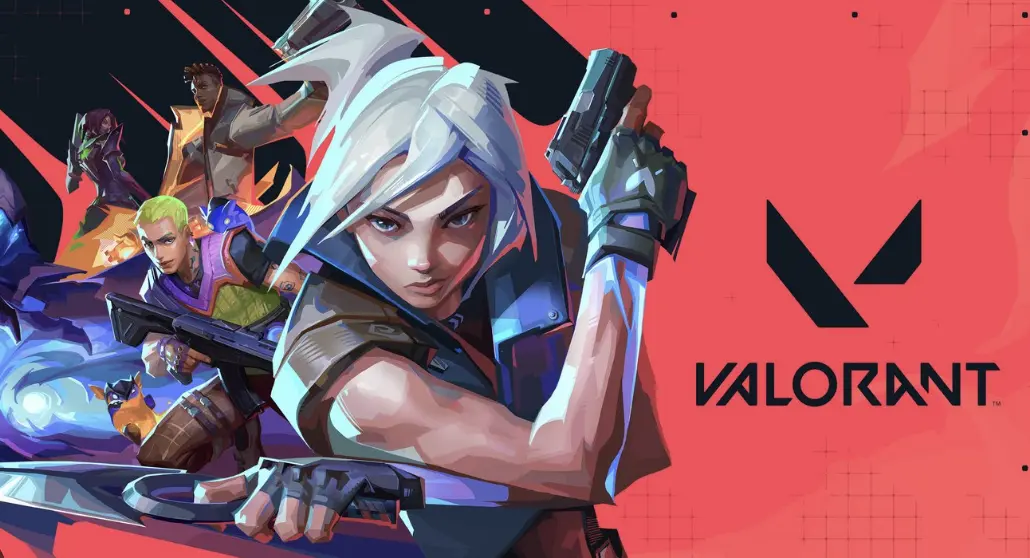
One clean headshot, a smoke in the perfect doorway, and suddenly the whole round flips. Valorant thrives on that mix of nerves and planning, where crisp shooting matters just as much as knowing when to flash, wall, scan, or fake a push to make the other team panic first.
What makes it so sticky is the round-by-round tension. Buy phase plans turn into messy retakes, last-second lurks, and defuses with your heartbeat doing cardio. You are juggling credits, reading utility, calling rotates, and hoping your teammate with the Operator is actually awake. When everything clicks, it feels brilliant. When it falls apart, it is still weirdly hard to stop queuing.
actionInstant play
💡
Editor's Note:Nothing humbles a confident squad faster than whiffing a spray and then blaming the ping.
Playing: Valorant
How to play
Controls
Move with WASD, but stop before firing if you want your shots to land somewhere useful instead of outlining the enemy dramatically.
Aim with the mouse and trigger your agent abilities with intention; utility works best when it sets up a fight, not when it gets tossed like confetti.
Core rules
Economy is part of the battle, so smart buys, saves, and bonus rounds shape your chances long before the first duel starts.
Abilities create space, gather info, or deny movement, but rounds are usually finished by disciplined aim and coordinated trades.
Goal
Win enough rounds by eliminating opponents or planting and defending, or defusing, the Spike to take the match.
Tips & tricks
The barrier drop is not your cue to improvise
Use the buy phase to decide something specific: who takes first contact, which angle gets utility, and where the fallback route is if the push stalls. Teams lose a silly number of rounds because five people leave spawn with expensive guns and absolutely no shared plan. Even a simple call like "smoke mid, drone short, trade me if I swing" gives your round actual bones.
Silence on the map usually means trouble, not safety
Mid-round is where impatient players donate free picks. If the enemy disappears after early utility, do not instantly stampede into a rotate. Hold your crosshair on likely lurk paths, keep one piece of utility ready, and make them prove the site hit before you abandon control. Valorant punishes guesses; information wins more rounds than sprinting.
Clutch rounds get easier when you waste their clock first
In a 1v2 or post-plant mess, your best friend is time. Reposition after every shot, force the defuse tap, and make opponents clear you twice if possible. A lot of players peek too early because the pressure feels gross. Let the Spike do some work for you, then take the duel when the enemy is stuck on a defuse, crossing open space, or panicking through your utility.
Why it’s fun
Every round feels meaningful because aim, economy, utility, and teamwork all collide in fast little mind games.
The clutch potential is absurdly satisfying; one smart flash, one perfect swing, and a doomed round suddenly belongs to you.
FAQ
Valorant é mais sobre mira ou habilidades?
Ambos importam, mas uma mira limpa ainda decide a grande maioria das lutas. Habilidades servem para criar duelos melhores, coletar informações, bloquear espaços ou atrasar avanços.
Por que os jogadores param de se mover antes de atirar no Valorant?
Porque a precisão cai drasticamente ao se mover. Bons jogadores param ou fazem counter-strafe antes de atirar para que as balas vão para onde a mira está, em vez de saírem voando para qualquer lugar.
O que é a Spike no Valorant?
A Spike é o dispositivo de objetivo que os atacantes plantam em um site. Os atacantes vencem ao defendê-la até a detonação, enquanto os defensores vencem ao impedir o plant ou desarmando-a a tempo.
Iniciantes conseguem curtir Valorant ou é competitivo demais?
Iniciantes podem com certeza começar a jogar, mas existe uma curva de aprendizado. Quando você entende a precisão de movimento, a economia e algumas habilidades básicas de agentes, o jogo começa a fazer muito mais sentido.