Geometry Dash Ball Mode Guide – How It Works, Why It Feels Hard, and How to Get Better
Learn how Ball Mode works in Geometry Dash, how Ball physics differ from Spider and Swing, why buffering matters, how orbs and slopes change the route, and the best ways to prac…
Ball Mode looks simple until you realize it is not a normal jump mode at all. Newer players often die in Ball sections because they click as if they were still playing Cube, but Ball is really about gravity switching, travel time, landing control, and route planning.
That is why Ball can feel either elegant or brutal. In a clean section, it feels rhythmic and satisfying. In a cramped section with awkward orb timing, slopes, speed changes, or visual clutter, one slightly bad click can wreck the next two or three inputs.
This guide explains the real Ball physics, what buffering actually does, why some orb interactions feel unfair, how Ball differs from Spider and Swing, what changes in Mini Ball and Dual Ball, and how to practice Ball without turning every run into panic spam.
The Short Answer
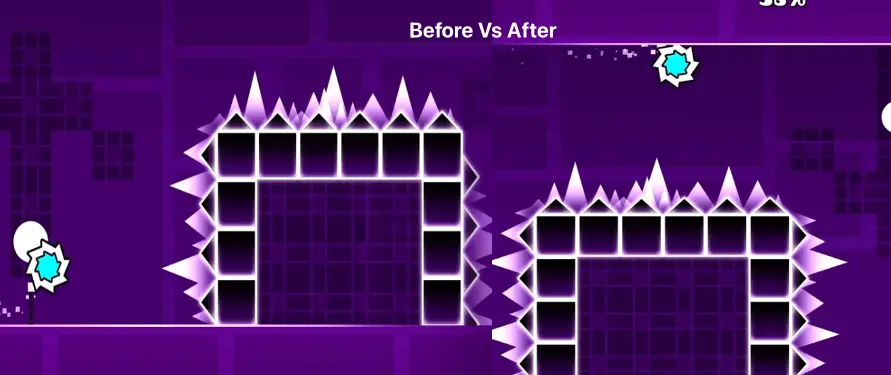
Ball Mode flips your gravity when you tap, but it does not teleport you instantly to the other surface. After the flip, the icon still moves through the air before it lands. That is the biggest difference between Ball and Spider, and it is why Ball depends so heavily on momentum, landing control, orb timing, and rhythm.
How Ball Mode Works
Ball flips gravity, but it does not teleport
The most important Ball rule is also the one many players misunderstand. A tap flips your gravity, but the Ball still has to travel through the air before it reaches the opposite surface. Spider is the mode that feels almost instant. Ball is the mode where the path between surfaces still matters.
Ball sticks to surfaces and rolls forward
Once Ball reaches the ground or ceiling, it attaches to that surface and continues rolling forward until the next input changes the route. A lot of beginners only think about the airborne part, but the grounded rolling state is just as important because that is where the next click is prepared.
Horizontal momentum carries through the flip
Ball keeps moving forward when you switch gravity. That preserved forward motion is what makes zig-zag routes, tight corridors, and repeated back-and-forth Ball gameplay possible. If you do not understand that forward momentum stays alive through the flip, many Ball sections feel random when they are really just fast.
Slopes change the route more than players expect
Slopes are not just decoration in Ball gameplay. They can change the speed, angle, and feel of the route, which is why slope-based Ball sections often feel faster and harder to read than flat layouts. On some slope interactions, the Ball can be launched with noticeably more speed than beginners expect, which makes the next landing much easier to mistime. If a Ball section uses slopes, do not treat the first attempt like normal flat-ground Ball. In Practice Mode, watch the launch angle first, then learn the next landing.
Orbs and pads change the route
Ball Mode gets much harder when orbs and pads enter the picture. Yellow orbs, blue orbs, green orbs, black orbs, and pads can all change the timing and route in ways that are not obvious if you are only thinking about the next obstacle instead of the next landing point.
The buffering technique
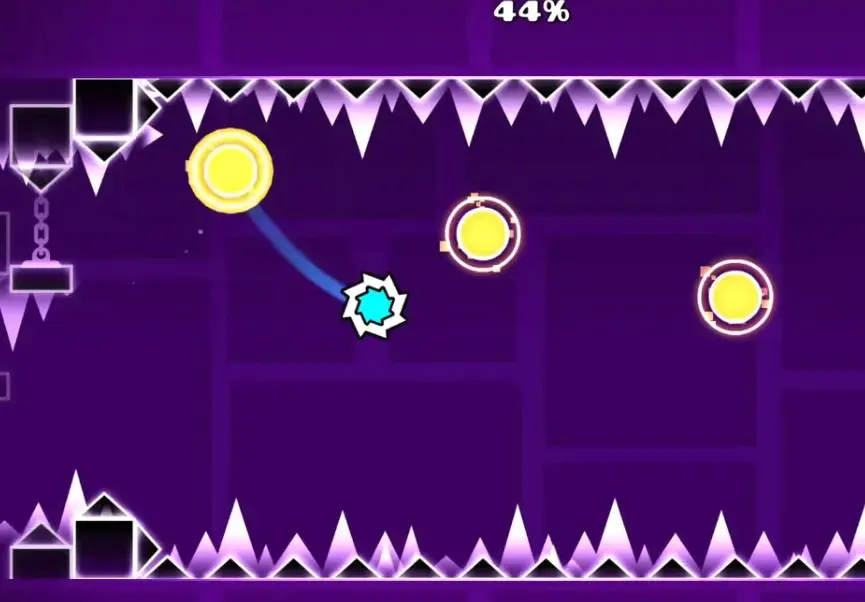
One of the most useful Ball tricks is buffering. Instead of trying to press on the exact frame you touch an orb, you can press slightly early and let the game trigger the orb on contact. In practice, Geometry Dash gives you a small input buffer window, which is why an early press can still come out correctly when the orb becomes valid. This makes tight Ball orb timings much more consistent, especially in fast or visually busy sections.
Key orbs in Ball sections
- Yellow orb: usually the easiest Ball orb to read because it extends the route in a fairly intuitive way.
- Blue orb: often changes your landing path more sharply than newer players expect, which is why it kills so many people in Ball sections.
- Green orb: can redirect the route in awkward ways if you hit it too early or on the wrong rhythm.
- Black orb: drops you much harder and can kill you instantly if the section expects a shallower path.
- Pads: often look simpler than orbs, but in Ball they still change the landing window enough to ruin the next click if you do not read ahead.
Hitbox feel can be misleading
Ball can feel strangely forgiving on some wall and ceiling grazes, especially compared with how punishing the timing windows are. That contrast confuses a lot of players. You may survive a visual scrape that looks dangerous, but still die on the next input because the route timing was tighter than the collision looked. Do not assume a section is safe just because you barely scraped through it once. The correct response is to keep reading the next landing, because Ball deaths usually come from the route breaking one beat later, not from the visual near-miss itself.
Ball vs Spider vs Swing at a Glance
Ball
Core feel: readable gravity switching with visible travel time. Main test: landing awareness, momentum control, and route planning.
Spider
Core feel: sharper and more immediate surface switching. Main test: fast reaction, instant route changes, and tighter click discipline.
Swing
Core feel: gravity-switch logic combined with continuous flight. Main test: pacing, sustained control, and switching under constant movement.
Why Ball Mode Feels Hard
Players mistime the landing
This is the biggest one. Ball has a visible route between surfaces, so players often click again before fully reading where the icon will land. That leads to early inputs, dead clicks, or a worse route one beat later.
Small mistakes snowball in tight corridors
Ball sections often use zig-zag paths, narrow ceilings, and low landing windows. If your first click is slightly late, the second route becomes worse, the third click has less margin, and the whole section collapses. Ball is one of the clearest examples of how a tiny early mistake becomes a full chain reaction.
Speed and Mini Ball distort the feel
At higher speed, Ball covers more horizontal distance during the same gravity flip. Mini Ball adds another layer because it resolves faster, falls faster, and breaks old timing habits immediately. A section that felt readable at normal size can feel wildly different once mini physics take over.
Reverse gravity Ball is its own skill check
If Ball enters a gravity portal, the route may still be simple on paper, but the read often feels wrong at first because your eyes are still expecting normal gravity. Inverted Ball deserves separate practice, especially when the level switches between normal and reverse gravity quickly.
Dual Ball is harder because the read becomes split
Dual Ball does not just make Ball twice as busy. It forces you to read two routes, two timings, and often two different visual priorities at the same time. Even when the pattern is symmetrical, Dual Ball is harder because your attention is divided and a single bad click can desync both paths.
Decoration can hide the real landing zone
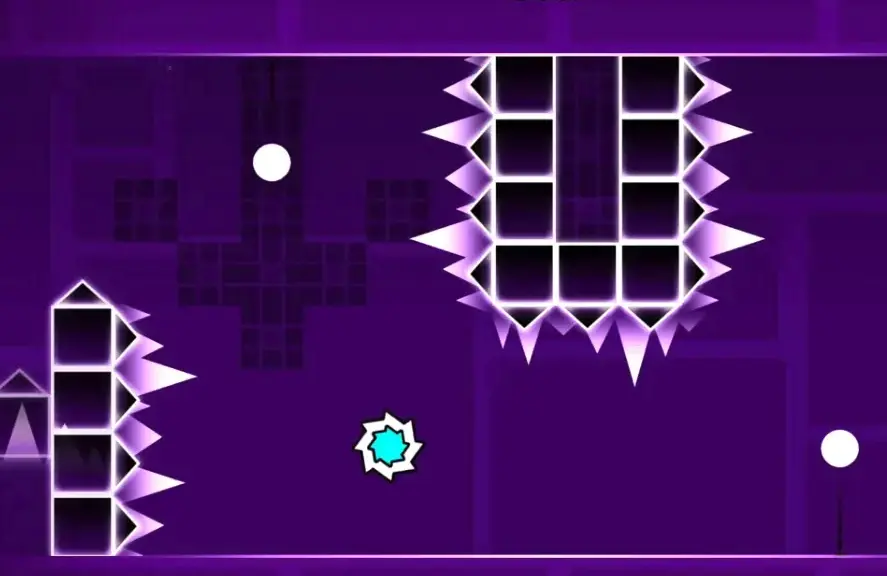
In many custom levels, Ball is not hard because the mechanic is broken. It is hard because the section is harder to read than it should be. Decoration, fake spikes, cluttered visuals, and memory-heavy transitions can all hide the real surface you need to aim for.
How to Practice Ball Mode Without Losing Your Mind
Use Practice Mode section by section
Do not try to learn a long Ball section as one giant block. Put checkpoints before the Ball part and after every hard transition. Ball gets much easier once your hands understand the route one piece at a time.
Practice the landing, not just the click
A lot of players think they missed the click when the real problem was the landing path. When you practice, ask yourself where the icon should end up, not only when you should tap.
Map the flips to the beat first
In Practice Mode, do three quiet reads before you try to clear the section. First, watch the Ball route without clicking. Second, listen for where each flip lines up with the beat. Third, count the section in simple pulses such as '1-2-3' before you attempt the run. Ball sections usually get much easier once the flip points are attached to the music instead of pure panic reaction.
Practice specific variants separately
Normal Ball usually breaks because players misread the landing. Mini Ball usually breaks because they keep using normal Ball timing in a route that now resolves much faster. Inverted Ball usually breaks because the eyes still expect normal gravity even when the logic has flipped. Slope Ball usually breaks because the launch angle and speed change more than expected. Dual Ball usually breaks because attention gets split and one bad click desyncs both paths. If one version keeps killing you, isolate that variant instead of grinding the entire level mindlessly.
Use copyables and strip decoration
If a custom level Ball section feels unreadable, use a copyable version and remove the decoration in the editor. Looking at the raw layout can instantly reveal whether the problem is your timing, your route, or the visual clutter.
Best Official Levels to Learn Ball Mode
Cycles
Cycles is the classic starting point for Ball Mode and also the place where many players first really understand what Ball gameplay is asking from them. It introduces the core flipping idea clearly and helps players learn the basic back-and-forth rhythm without overwhelming them. Note that Cycles also has fake orbs near the start, so beginners should not assume every orb-looking object should be clicked.
Time Machine
Time Machine is useful once you are past the very first Ball fundamentals. It starts asking for faster adaptation and more compressed route reading, which makes it a good bridge into less forgiving Ball gameplay.
xStep
xStep is a good next step once you understand the basics. It asks for cleaner routing, better awareness, and more confidence in the section flow instead of pure beginner-level survival.
Hexagon Force
Hexagon Force is valuable because it introduces slopes and Dual gameplay in a way that makes Ball feel more advanced without becoming unreadable immediately. It is one of the best official levels for understanding that Ball can change character when the route is no longer flat and single-lane.
Theory of Everything 2
TOE 2 pushes Ball into tighter, more technical territory. It is a strong example of how Ball starts feeling dangerous once routing, speed, and visibility get compressed.
Deadlocked
Deadlocked shows how Ball can stay fun even in a demon context. It mixes tighter control, gimmick ideas, and faster pressure while still feeling recognizably Ball.
Good Community Levels for Ball Practice
DeCode
DeCode is a strong beginner-to-intermediate choice because it has clear classic rhythm, clean Ball routing, and enough pressure to feel real without becoming unreadable.
B
B is better once you are comfortable with the basics and want a smoother, more modern Ball feel. It is especially good for learning how Ball can stay expressive even when the transitions get busier.
Ball Challenge-style levels
Short Ball Challenge-style levels are one of the best ways to isolate Ball weaknesses because they cut away unrelated modes and let you repeat the same Ball ideas quickly. They are especially useful if you want pure Ball reps instead of full mixed-mode runs.
Why Ball Still Matters After 2.2
Ball is still one of the clearest route-reading modes
Even after 2.2 added newer mechanics and modernized the game, Ball remains one of the cleanest ways to learn gravity-switch pacing. It teaches route logic in a form that is easier to see than Spider and easier to isolate than Swing.
Ball skills transfer into Swing better than many players expect
Ball and Swing do not feel the same, but they share a core instinct: you are deciding when the route should switch rather than only whether you should jump. Players who understand Ball timing often adapt to Swing faster because the input logic already feels familiar.
Platformer does not replace Ball fundamentals
Platformer content can help with movement control and patience, but it does not replace what Ball teaches in Classic mode. Ball still trains read-ahead timing, gravity-based route control, and the discipline of surviving one continuous run.
When Ball Mode Is Good, and When It Is Bad
Good Ball gameplay
Good Ball gameplay feels readable, rhythmic, and fair. The route makes sense, the surfaces are easy to read, and the section rewards control rather than panic.
Bad Ball gameplay
Bad Ball gameplay usually feels messy rather than genuinely complex. You get awkward orb usage, unclear landing zones, cluttered visuals, and setups where the section becomes memory-heavy for the wrong reasons.
FAQ
What does Ball Mode do in Geometry Dash?
Ball Mode flips gravity when you tap, then travels toward the opposite surface while keeping forward motion. It is not a normal jump and it is not an instant teleport.
Why is Ball Mode hard in Geometry Dash?
Ball feels hard because it depends on momentum, landing control, route reading, orb timing, and rhythm. A small early mistake can shift the next few landings and ruin the whole section.
What is buffering in Ball Mode?
Buffering means pressing slightly before you touch an orb so the game triggers it as soon as the input becomes valid. It is one of the best ways to make Ball orb timing more consistent.
Why do orbs feel so weird in Ball sections?
Because many Ball orb deaths are really route problems, not pure reaction problems. The orb changes where you land next, so an early or late trigger can produce a completely different line.
What changes in Mini Ball?
Mini Ball resolves faster, falls faster, and often destroys your old timing habits immediately. Many players die because they keep using normal Ball pacing in a section that now moves much more sharply.
What is Dual Ball?
Dual Ball is Ball gameplay under Dual mode, where you are effectively reading and timing two paths at once. Even symmetrical patterns feel harder because your attention is split.
Do Ball skills help with Swing?
Yes, to a degree. Ball teaches gravity-switch timing and route logic, and those instincts can transfer into Swing even though Swing adds continuous flight and harsher pacing.
Why does Ball sometimes feel forgiving on grazes but strict on timing?
Because collision feel and timing feel are not the same thing. You can survive a scrape that looks scary, then still die because the next landing window was much tighter than the visual collision suggested.
What is the best official level to learn Ball Mode?
Cycles is still the best first official Ball level for most players because it teaches the basic flipping idea clearly. Just remember that some fake orbs near the start should be ignored.