Drive Mad Level 99 Walkthrough - Lift Off Guide
Complete Drive Mad level 99 walkthrough. Learn how to beat Lift Off by using the segmented bridge like a launch ramp, timing your acceleration, and landing cleanly on the far pl…
Drive Mad level 99, called Lift Off, is a medium level built around momentum, obstacle timing, and speed control. The challenge is not a simple bridge crossing. The wooden path in front of you behaves like a flexible launch ramp, so the real goal is to use its bend and rebound to throw the truck across the huge gap. If you rush onto it with no control, the truck pitches badly and falls short. If you hesitate too much, you lose the lift needed for the jump. Once you see the bridge as a springboard instead of a road, the level becomes much easier to read.
Why Level 99 Feels Hard
This Drive Mad level feels awkward because the bridge itself changes shape under the truck. That means your line, speed, and launch angle are all tied together. Many failed runs happen because players either charge too hard and nose down off the rebound, or approach too softly and never get enough distance. The jump is reliable, but only if you load the bridge first and then let the lift happen.
Step-by-Step Walkthrough for Drive Mad Level 99
Step 1: Roll onto the segmented bridge and let it sink under your weight
At the start, move onto the wooden bridge with steady forward speed instead of a wild burst. As the truck reaches the middle, the connected planks dip and store the weight of the vehicle. That dip is exactly what you need. Do not treat this section like a flat road. Your first job is to load the bridge so it can throw you upward on release.

Step 2: Hold your line and ride the rebound into the air
Once the bridge compresses, keep your momentum clean and let the ramp kick the truck upward. This is the decisive moment. You want the rebound to lift you across the gap, not throw the nose too far down. Avoid panicking with extra steering or sloppy timing. A smooth launch is much stronger than a desperate one.
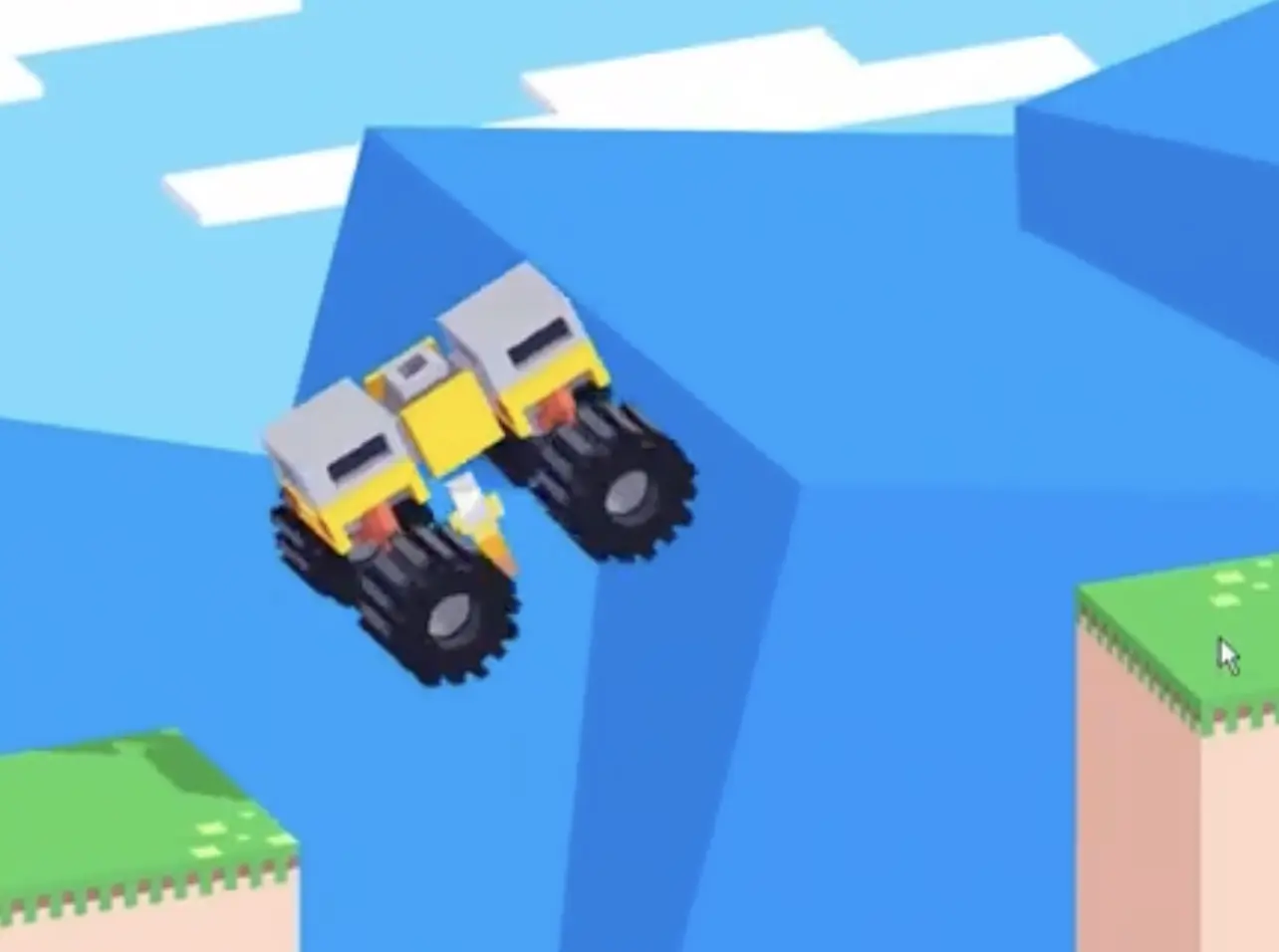
Step 3: Stay level on the flight and land on the far platform
After takeoff, focus on landing attitude more than raw speed. Keep the truck as level as possible so the tires meet the far platform cleanly instead of clipping the edge. Once you touch down, keep driving forward and stabilize immediately. The hard part is the launch, so if you land without over-rotating, the finish is basically yours.
Best Cue for Consistent Clears
Load, lift, land.
Why This Method Works
This method works because the bridge is doing most of the work for you. By entering with controlled momentum, you let the planks bend and create a natural launch angle. That makes the jump far more stable than trying to brute-force it with acceleration alone. The level stops feeling random once you understand that the dip is part of the solution, not a hazard to avoid.
Common Mistakes in Drive Mad Level 99
- Accelerating too hard onto the bridge and ruining the launch angle
- Hesitating so much that the rebound never gets enough lift
- Treating the bridge like a normal road instead of a springboard
- Letting the truck nose down too much in midair
- Clipping the far ledge because the landing was not level
Fast Summary
- Drive onto the segmented bridge with control
- Let the bridge dip under the truck's weight
- Use the rebound to launch across the gap
- Keep the truck level in the air
- Land cleanly and drive to safety
FAQ
How do you beat Drive Mad Level 99?
Roll onto the segmented bridge with controlled speed, let it compress under the truck, then use the rebound to launch across the gap and land cleanly on the far platform.
Why is Drive Mad Level 99 difficult?
Because the bridge changes shape under the truck, so your speed and jump angle are linked. Too much speed or too little speed can both ruin the launch.
What is the key trick in Drive Mad Level 99?
The key trick is to use the bridge as a springboard. You need to load it first and let its rebound create the jump.
Should I go full speed in Drive Mad Level 99?
No. You want controlled momentum, not reckless speed. A steady approach creates a cleaner rebound and a safer landing.